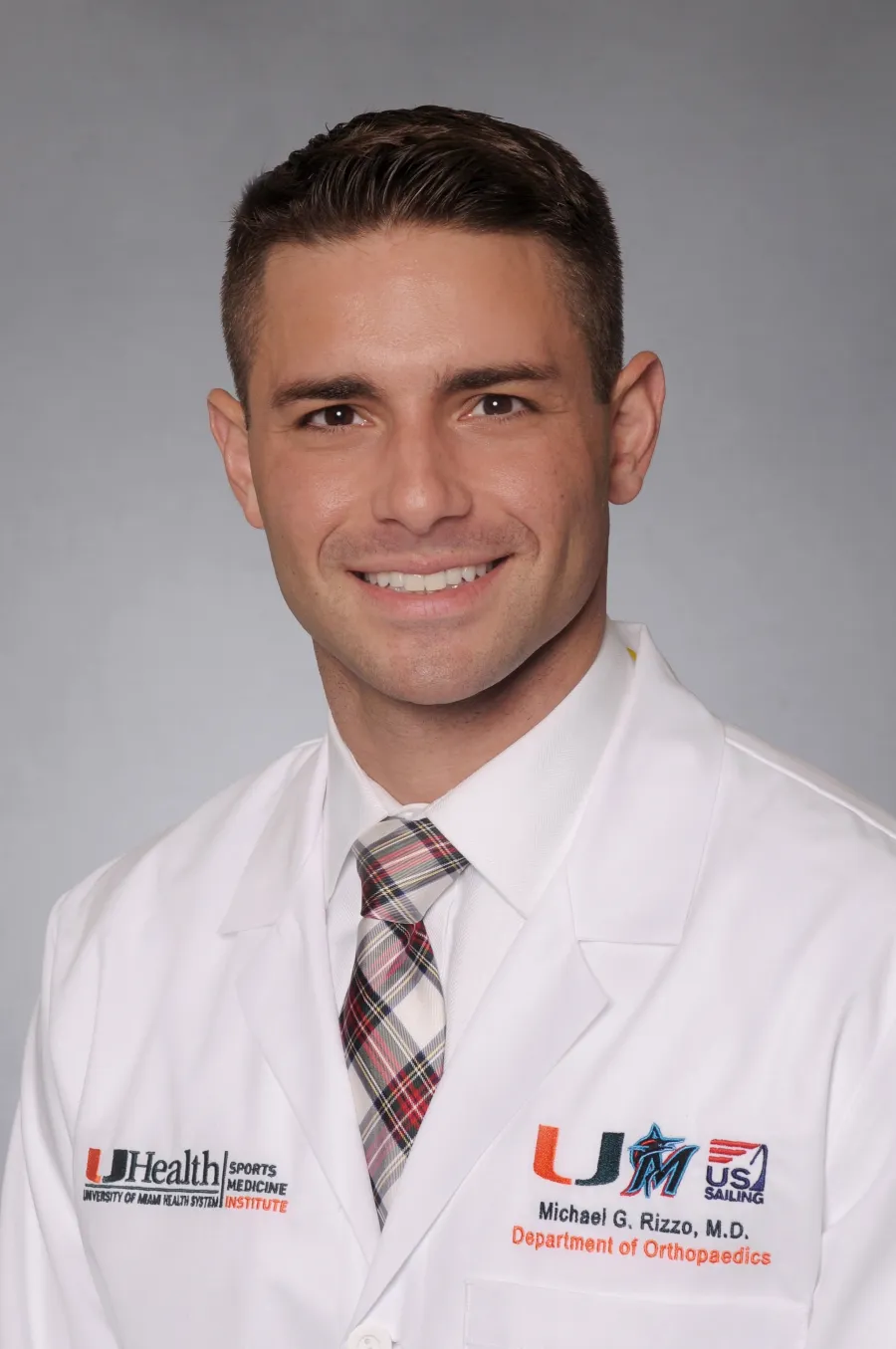
I was a patient first
I grew up in St. Louis and spent most of my childhood in a pool. Swimming led to water polo, and water polo took me to Harvard, where I played Division I. Early in my freshman season, years of swimming and throwing caught up with me. My shoulder kept slipping out of place. Physical therapy didn’t hold it, and I had arthroscopic surgery to stabilize it.
So I know what it is to be sidelined, to weigh an operation, and to wonder whether you’ll be the same afterward. I also saw what the right treatment gives back. That is why I do this work.
Why orthopaedics
I have always wanted to know how things work. As a kid I took things apart and taught myself whatever I needed to build the next idea, which is how I ended up studying both biology and computer science. Orthopaedic surgery brings those together: anatomy, mechanics, a problem to solve, and a person who gets better.
Where I trained
I studied molecular and cellular biology at Harvard, with a secondary field in computer science, and earned my medical degree at Washington University in St. Louis. I came to Miami for my orthopaedic surgery residency at the University of Miami and Jackson Memorial Hospital, where I cared for patients with complex injuries, worked with Miami Hurricanes athletes, and covered local football sidelines. I then completed a sports medicine fellowship at The Steadman Clinic in Vail, Colorado, with a focus on arthroscopy, joint preservation, and complex sports injuries.
What I treat
I’m an Assistant Professor of Orthopaedic Surgery at the University of Miami Miller School of Medicine. In the shoulder, I treat instability, rotator cuff tears, and arthritis, including shoulder replacement. In the hip, I treat impingement and labral tears, and gluteal and hamstring tendon tears. In the knee, I treat ligament, meniscus, and kneecap injuries.
How I practice
Your goal might be a return to competition. It might be golf, keeping up with your kids, or getting through the day without pain. I start by listening. Then I explain what I see and lay out the options. Many injuries don’t need surgery. When surgery is the right choice, I’ll tell you why, and what recovery will ask of you.
Outside the hospital
I still write software. My research uses it to study how patients understand surgery, how recovery can be measured, and how surgeons learn. My water polo days are behind me, but I run marathons, race triathlons, cycle, ski, and hike. Each one reminds me how much it means to be able to move.
Whether you compete, play on weekends, or just want to move without pain, my aim is to get you back to life on your terms.