A pop with rapid swelling
This pattern can occur with ligament or cartilage injuries and is worth evaluating early.
A swollen, painful, or unreliable knee can change how you get through the day. Learn about ligament and meniscus injuries, kneecap problems, and options for care.
Request an appointmentOpens my UHealth profile, in English.
Swelling, instability, locking, alignment, and activity goals matter as much as a scan. The first step is understanding the pattern before choosing treatment.
This pattern can occur with ligament or cartilage injuries and is worth evaluating early.
A knee that physically cannot move through its range is different from ordinary clicking.
First-time and repeated kneecap instability require different decisions and imaging review.
Load, alignment, strength, cartilage, and recovery all influence the plan; surgery is not assumed.
An ACL tear injures a ligament that helps keep the knee stable during turning and pivoting. It may happen during a sudden change of direction or landing, sometimes with a pop and swelling.
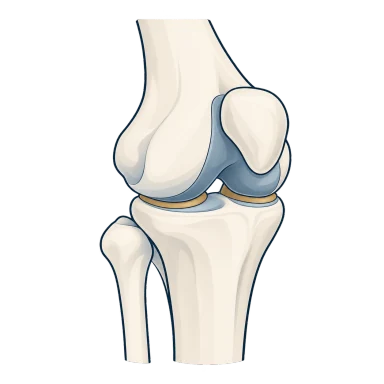
Open patient guideA meniscus tear affects one of the cushions of cartilage between the thighbone and shinbone. Tears can follow a twisting injury or develop with age.
Open patient guidePatellar instability means the kneecap slips partly or completely out of its groove. It can cause pain, swelling, and a feeling that the knee will give way.
Open patient guideCollateral ligament injuries affect the ligaments on the inner or outer side of the knee. A blow or awkward change of direction can cause pain, swelling, or a feeling that the knee gives way.
Open patient guideA quadriceps tendon tear damages the tendon just above the kneecap that helps straighten the knee. It may cause a pop, swelling, bruising, and difficulty extending the leg.
Open patient guideA patellar tendon tear damages the tendon connecting the kneecap to the shinbone. A complete tear can make it difficult or impossible to straighten the knee.
Open patient guideBowlegs and knock-knees change how weight passes through the knee. For some people, this contributes to pain or extra stress on cartilage, ligaments, and the meniscus.
Open patient guideACL reconstruction replaces a torn knee ligament with a tendon graft. It aims to improve stability for activities such as turning, cutting, and pivoting.
Open patient guideMeniscus surgery may repair a tear, remove an unstable portion, or replace missing meniscus tissue in selected cases. Preserving useful meniscus tissue is a priority.
Open patient guideMPFL reconstruction rebuilds a ligament that helps keep the kneecap from slipping toward the outside of the knee. A tendon graft provides the new support.
Open patient guideA tibial tubercle osteotomy moves the point where the patellar tendon attaches to the shinbone. It can change how the kneecap tracks or reduce pressure on damaged cartilage.
Open patient guideTrochleoplasty reshapes the groove where the kneecap moves. It is considered for selected patients with repeated instability and a severely abnormal groove.
Open patient guideMCL reconstruction uses a tendon graft to rebuild support on the inner side of the knee. It may be considered when that ligament cannot provide enough stability.
Open patient guideLCL reconstruction uses a tendon graft to rebuild support on the outside of the knee. It may also address nearby structures at the back and outer side of the joint.
Open patient guideQuadriceps tendon repair reconnects the torn tendon above the kneecap. The aim is to restore the ability to straighten the knee.
Open patient guidePatellar tendon repair reconnects the torn tendon between the kneecap and shinbone. The repair depends on where the tendon tore and may use stitches through bone or small anchors.
Open patient guideA high tibial osteotomy changes the alignment of the shinbone near the knee. It can shift weight away from a worn or damaged inner part of a bowed knee.
Open patient guideA distal femoral osteotomy changes the alignment of the thighbone near the knee. It may be used to reduce excess pressure on the outer part of a knock-knee.
Open patient guideYou do not need to arrive knowing the diagnosis or the treatment. Bring what you already have; the visit is designed to make the next decision clearer.
We discuss how symptoms began, what matters in your work or sport, and what you have already tried.
I connect the physical examination with your existing X-rays, MRI, or CT studies and explain what is—and is not—meaningful.
The plan may include rehabilitation, activity changes, medication or injection options, additional imaging, or a surgical discussion when appropriate.