Shoulder Instability
Shoulder instability means the ball of the joint can slip partly or completely out of its socket.
Educational content only • Not a substitute for medical advice • For emergencies call 911
What Shoulder Instability Means
Shoulder instability means the ball at the top of the upper arm does not stay centered in the shoulder socket as well as it should. It may partly slip out and slide back in on its own, called a subluxation, or come all the way out, called a dislocation.
The shoulder is built for a wide range of motion, so it is easier to injure than some other joints. Instability can start after an injury, or it can happen because the tissues that support the joint are naturally loose. Once the shoulder slips out once, it may be more likely to happen again.
Anatomy and imaging
These illustrations and imaging examples can help you understand the anatomy. They do not show your diagnosis.
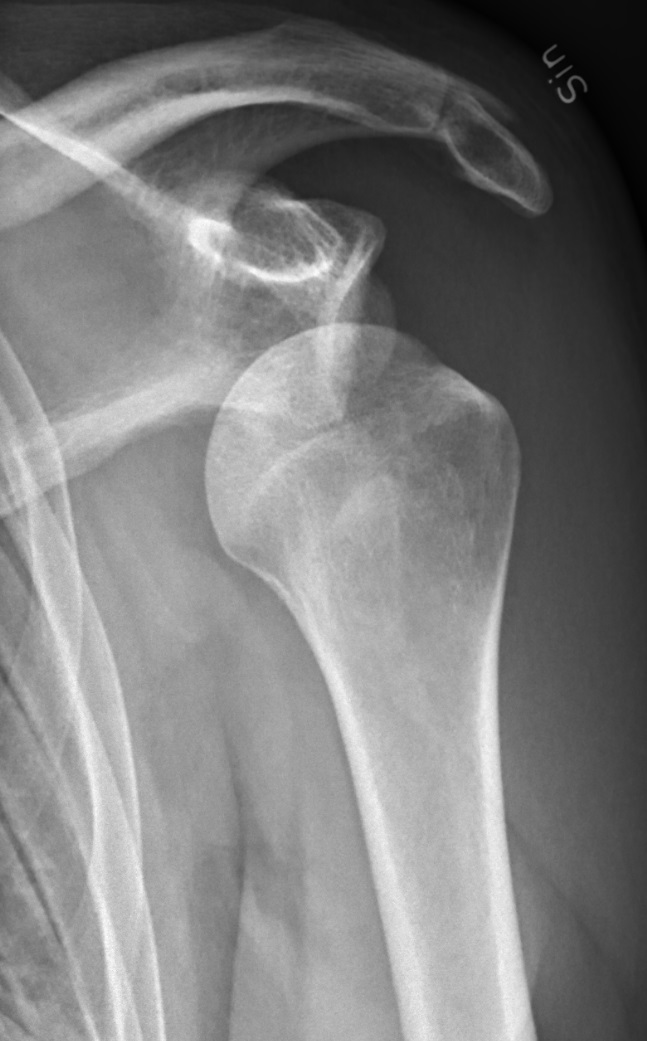
Example X-ray of a dislocated shoulder before reduction.
Image and video credits
Shoulder dislocation, anteroposterior before reduction (opens in a new tab) — Mikael Häggström, M.D. CC0 1.0 (opens in a new tab).
Symptoms You May Notice
- A feeling that the shoulder is loose, slipping, or about to "pop out"
- Pain with reaching overhead, reaching behind you, throwing, or lifting
- Repeated episodes where the shoulder partly or fully comes out of place
- Weakness or loss of confidence using the arm
- Clicking, catching, or popping
- Swelling, bruising, or a misshapen shoulder after an injury
Common Causes
Shoulder instability can happen because of:
- A fall, collision, or sports injury that causes a first dislocation
- A previous dislocation or subluxation
- Repetitive overhead activity that stretches the supporting tissues over time
- Naturally loose joints or connective tissue
You may hear your clinician mention the labrum, capsule, or ligaments. These are the soft tissues that help keep the shoulder centered in the socket.
How It Is Diagnosed
Diagnosis starts with your story and an exam. Your clinician will ask what happened, what positions trigger the problem, and whether the shoulder has fully come out before.
During the exam, they check motion, strength, looseness, and whether certain positions bring on the unstable feeling.
Tests may include:
- X-rays to look for dislocation, fracture, or bone changes
- MRI, sometimes with contrast dye, to look for injury to the labrum, ligaments, or other soft tissues
- CT scan if there have been repeated dislocations or if bone loss needs to be measured
You may also hear terms such as Bankart lesion or Hill-Sachs lesion. These are names for common injuries that can happen after a dislocation.
Nonsurgical Treatment
For a first-time dislocation or milder instability, treatment often starts without surgery.
Common treatments include:
- If the shoulder is fully out of place, a trained clinician may need to guide it back into place. This is called a reduction.
- A sling for a short time after the injury
- Ice and pain-relief medicines, such as acetaminophen or anti-inflammatory medicines like ibuprofen or naproxen, if appropriate for you
- Physical therapy to improve motion and strengthen the rotator cuff and shoulder blade muscles so they help keep the joint centered
- Activity changes to avoid positions that make the shoulder feel like it will slip out
Too much rest can lead to stiffness, so gentle guided movement usually starts once your clinician says it is safe.
When Surgery May Be Discussed
Surgery may be discussed when:
- The shoulder keeps slipping out despite therapy
- There is a tear or bone loss that makes repeat dislocation more likely
- Instability is interfering with work, sports, or daily life
- A first dislocation happens in someone at high risk for repeat episodes
Common procedures include:
- Arthroscopic stabilization or Bankart repair, which repairs torn tissue and tightens stretched tissue
- Bone-block procedures such as a Latarjet when there is significant bone loss
- Capsular tightening when the shoulder is loose in more than one direction
The exact procedure depends on the pattern of instability and how much tissue or bone has been damaged.
Recovery and Return to Activity
Recovery depends on how severe the instability is and whether surgery is needed.
Without surgery:
- Pain often improves over days to weeks
- Therapy commonly lasts several weeks to a few months
- Return to sports or heavy work is usually gradual
After surgery:
- A sling is usually needed at first
- Motion is restored slowly, then strengthening is added
- Everyday activities often return before sports or heavy lifting
- Return to contact sports, throwing, or heavy overhead work may take several months; 6 months or more is common for higher-risk activities
Following the rehab plan is one of the best ways to lower the chance of the shoulder slipping out again.
When to Seek Urgent Help
Seek urgent medical care if:
- The shoulder looks out of place after an injury
- You cannot move the arm after a fall or collision
- You have severe pain, major swelling, or sudden deformity
- The hand or arm becomes numb, weak, pale, or cold
- You think the shoulder is fully dislocated
Do not try to force the shoulder back into place yourself.
When to Call the Office
Call the office if:
- The shoulder keeps slipping or feels less stable
- Pain is not improving as expected
- You are losing motion or strength
- Therapy exercises are causing repeated instability
- After surgery, you have fever, increasing redness, drainage, or worsening pain
Prevention and Daily Life
- Keep up with shoulder and shoulder blade strengthening once symptoms improve
- Warm up before sports and return to activity gradually
- Avoid high-risk positions until you are cleared
- Use good technique for throwing, lifting, and overhead activity
- Get checked after a first dislocation instead of waiting for repeat episodes
Sources
References for further reading about this condition or procedure.
- Chronic Shoulder Instability (opens in a new tab)
American Academy of Orthopaedic Surgeons (AAOS), OrthoInfo
- Shoulder Instability (opens in a new tab)
American Orthopaedic Society for Sports Medicine (AOSSM)