Groin or front-of-hip pain
Often worse with sitting, bending, pivoting, or getting in and out of a car.
My hip practice focuses on labral tears, impingement (FAI), tendon injuries, and hip arthroscopy. Explore these conditions and how a first visit works.
Request an appointmentOpens my UHealth profile, in English.
Hip pain is not always caused by the finding that appears on an MRI. Location, motion, strength, and how symptoms began help identify what is actually driving the problem.
Often worse with sitting, bending, pivoting, or getting in and out of a car.
May be tender when lying on that side or walking, climbing stairs, and running.
Can come from the hip, tendons, lower back, or nearby nerves and deserves a careful exam.
A scan can show a labral tear without proving it is the source of pain; symptoms and examination matter.
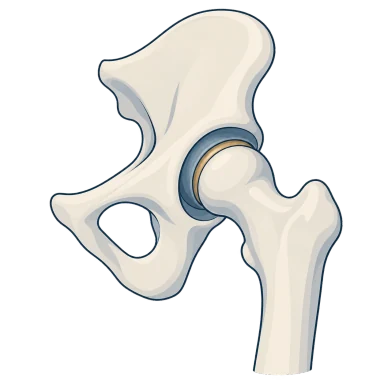
Hip impingement (FAI) occurs when the shape of the ball or socket causes extra contact during movement. This can injure the labrum, the ring of tissue around the socket, and cause groin pain, clicking, or stiffness.
Open patient guideA gluteus medius tear affects a tendon on the outside of the hip that helps keep your pelvis steady when you walk. It can cause pain on that side, a limp, or weakness on stairs.
Open patient guideA proximal hamstring tear injures the tendons near the sit bone at the back of the pelvis. It may cause a sudden pop, bruising down the thigh, and pain when sitting.
Open patient guideSnapping hip is a popping or clicking sensation when a tendon moves over bone around the hip. It is often painless, though some people develop irritation or pain.
Open patient guidePain on the outside of the hip may involve an irritated bursa, nearby tendons, or both. It can make lying on that side, walking, or climbing stairs uncomfortable.
Open patient guideThese guides explain conditions I don’t treat. For a known diagnosis, contact UHealth for the appropriate specialist.
Hip arthritis damages the smooth cartilage in the ball-and-socket joint. Pain and stiffness can make walking, climbing stairs, or putting on shoes difficult.
Open patient guideEducation only · outside Dr. Rizzo’s practiceHip dysplasia means the socket does not cover enough of the ball of the hip joint. The extra strain on the labrum and cartilage may cause groin pain, clicking, or fatigue with activity.
Open patient guideEducation only · outside Dr. Rizzo’s practiceAvascular necrosis, also called osteonecrosis, develops when part of the hip bone loses its blood supply. The weakened bone can eventually collapse and damage the joint.
Open patient guideHip arthroscopy uses a small camera and instruments to treat selected problems inside the hip. These may include a torn labrum, hip impingement, or cartilage damage.
Open patient guideHip labral repair reattaches the ring of tissue around the hip socket. This tissue helps form a seal that supports the joint.
Open patient guideGluteus medius repair reattaches a torn tendon on the outside of the hip. It aims to reduce pain and improve the strength that keeps the pelvis steady during walking.
Open patient guideProximal hamstring repair reattaches torn tendons to the sit bone at the back of the pelvis. It aims to improve strength and reduce symptoms from the injury.
Open patient guideIliopsoas release lengthens or partly releases a tendon at the front of the hip. It may be considered for painful snapping that has not improved with nonsurgical treatment.
Open patient guideTrochanteric bursectomy removes irritated bursa tissue on the outside of the hip. It may be considered when pain continues despite nonsurgical treatment.
Open patient guideThese guides explain procedures I don’t perform. If one has been recommended to you, contact UHealth for the appropriate specialist.
Core decompression creates small channels in the ball of the hip to reduce pressure in bone affected by avascular necrosis. It is generally considered before the joint surface has collapsed.
Open patient guideEducation only · outside Dr. Rizzo’s practiceTotal hip replacement replaces the damaged ball and socket with implants. It may be considered when arthritis causes substantial pain and limits daily activity despite other treatment.
Open patient guideEducation only · outside Dr. Rizzo’s practiceHip resurfacing covers the ball of the hip with a metal cap and replaces the socket surface. It preserves more of the thighbone than a total hip replacement but has distinct risks, including metal-related reactions and fracture.
Open patient guideEducation only · outside Dr. Rizzo’s practiceA periacetabular osteotomy (PAO) repositions the hip socket so it covers the ball more fully. It may be considered for painful hip dysplasia when enough healthy cartilage remains.
Open patient guideYou do not need to arrive knowing the diagnosis or the treatment. Bring what you already have; the visit is designed to make the next decision clearer.
We discuss how symptoms began, what matters in your work or sport, and what you have already tried.
I connect the physical examination with your existing X-rays, MRI, or CT studies and explain what is—and is not—meaningful.
The plan may include rehabilitation, activity changes, medication or injection options, additional imaging, or a surgical discussion when appropriate.