Hip Arthritis
Hip arthritis damages the smooth cartilage in the ball-and-socket joint.
Educational content only • Not a substitute for medical advice • For emergencies call 911
What Is Hip Arthritis?
Hip arthritis happens when the hip joint becomes irritated and the smooth cushioning surfaces wear down over time. This can cause pain, stiffness, and difficulty with everyday activities such as walking, climbing stairs, or putting on socks and shoes.
The most common type is osteoarthritis. In osteoarthritis, the protective cartilage that covers the ends of the bones slowly wears away. Other types, such as rheumatoid arthritis or spondyloarthritis, are caused by inflammation from the immune system and may progress more quickly if not treated.
Hip arthritis is common, especially as people get older. Many people are able to manage symptoms for years with a combination of self-care, physical therapy, and medications. Some people eventually need surgery if pain and stiffness continue to limit daily life.
Anatomy and imaging
These illustrations and imaging examples can help you understand the anatomy. They do not show your diagnosis.
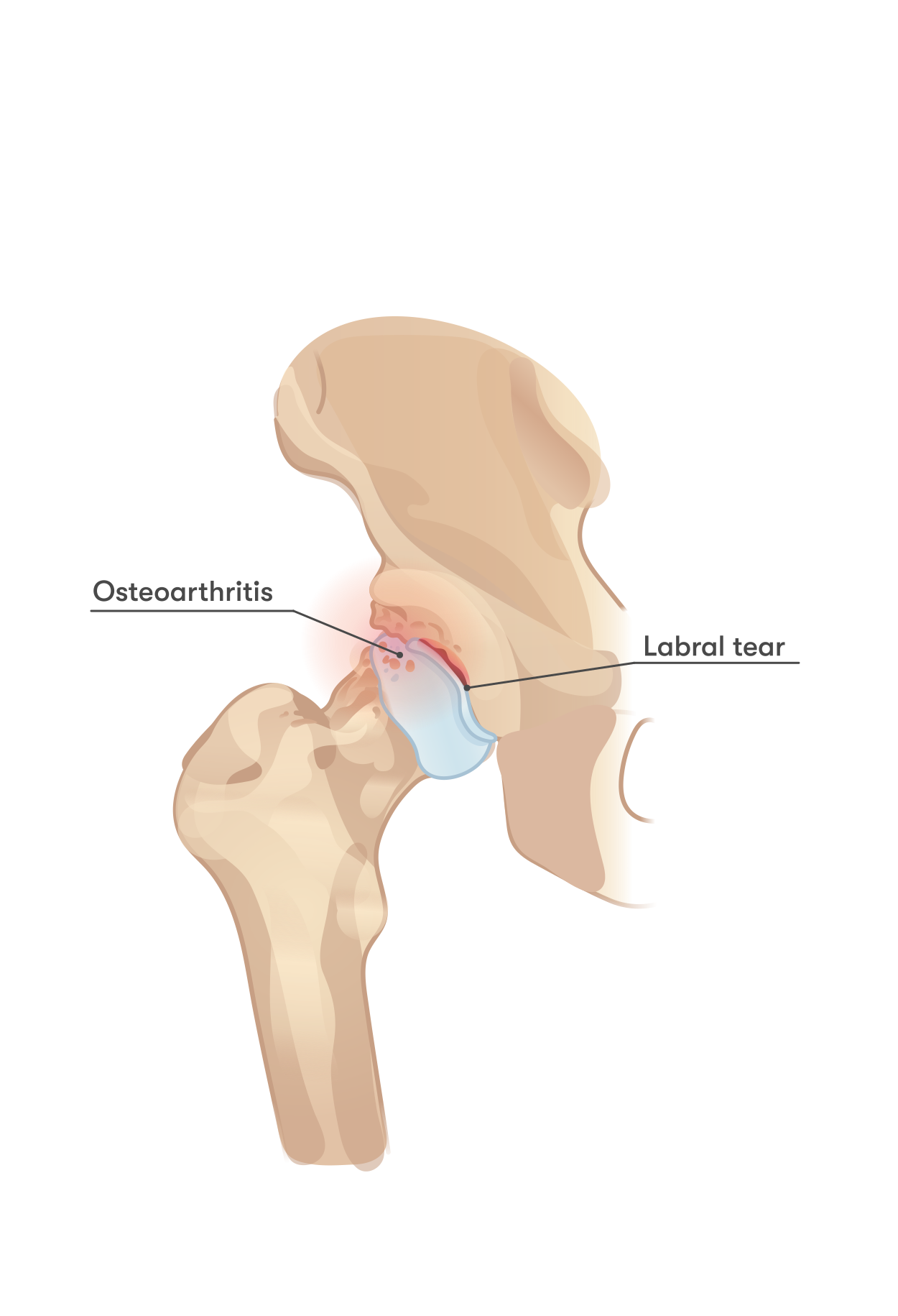
Simplified illustration of hip osteoarthritis.
Image and video credits
Hip osteoarthritis (opens in a new tab) — InjuryMap. CC BY-SA 4.0 (opens in a new tab).
Hip Anatomy and What Happens With Arthritis
The hip is a ball-and-socket joint. The ball is the top of the thigh bone (femoral head), and the socket is part of the pelvis (acetabulum). Smooth cartilage covers both surfaces so the ball can glide easily in the socket. A thin lining called the synovium produces fluid that helps the joint move smoothly.
With osteoarthritis:
- The cartilage becomes thinner and rougher.
- The bones may rub together, causing pain.
- The body may form extra bone edges called bone spurs.
- The space between the bones on X-ray looks narrower.
With inflammatory arthritis:
- The synovium (joint lining) becomes inflamed and thickened.
- Inflammatory fluid can damage cartilage and nearby bone.
- Over time, this can change the shape and function of the joint.
Common Symptoms
People experience hip arthritis in different ways, but common symptoms include:
- Aching pain in the groin, front of the thigh, side of the hip, or buttock.
- Pain that is worse with activity (walking, standing, climbing stairs) and better with rest.
- Stiffness, especially in the morning or after sitting for a while.
- Trouble bending to put on socks or shoes, or getting in and out of a car.
- A feeling of grinding, catching, or clicking inside the joint.
- Limping, needing to hold onto furniture, or using a handrail more often.
Not all hip pain is caused by arthritis. Back problems, muscle or tendon issues, and problems with other nearby joints can cause similar symptoms. Your clinician can help sort this out.
Causes and Risk Factors
Things that can raise the chance of hip arthritis include:
- Aging and general wear and tear, especially after about age 55.
- Extra body weight, which increases pressure on the joint.
- Repetitive stress from certain jobs, sports, or activities.
- Previous hip injuries, such as fractures or dislocations.
- Hip shape problems present from childhood (such as hip dysplasia or femoroacetabular impingement).
- Family history or genetic tendency toward arthritis.
- Inflammatory diseases such as rheumatoid arthritis or ankylosing spondylitis.
Having a risk factor does not mean you will definitely get arthritis, and people without risk factors can still develop it.
How Hip Arthritis Is Diagnosed
Your clinician will usually diagnose hip arthritis based on your story, a physical exam, and imaging tests.
A typical evaluation may include:
- Medical history
- When the pain started, what makes it better or worse, and how it affects daily life.
- Other medical conditions and medications.
- Physical examination
- Checking your walking pattern (gait), leg length, and posture.
- Moving the hip to see where pain occurs and how far it moves.
- Checking strength, reflexes, and nearby joints.
- Imaging tests
- X-rays are the most common and can show joint space narrowing, bone spurs, and thicker bone under the cartilage.
- MRI is sometimes used to look more closely at cartilage, bone, and surrounding soft tissues.
- Lab tests (in selected cases)
- Blood tests to look for signs of inflammatory or autoimmune disease.
- Occasionally, removal of joint fluid with a needle (joint aspiration) to check for infection or crystal-related arthritis.
These tests also help rule out other causes of hip pain.
Nonsurgical Treatment Options
The first goal of treatment is to reduce pain, improve movement, and help you stay active and independent. Many people never need surgery.
Common nonsurgical options include:
- Lifestyle changes
- Weight loss, when appropriate; even modest weight loss can lessen stress on the hip.
- Choosing low-impact exercises such as walking on level ground, cycling, swimming, or water aerobics.
- Pacing activities, taking breaks, and avoiding long periods of standing or heavy lifting.
- Physical therapy and exercise
- Stretching to keep the hip flexible.
- Strengthening the muscles around the hip, core, and legs to better support the joint.
- Practicing safe ways to bend, lift, and move to protect the hip.
- Assistive devices and supports
- Using a cane, trekking pole, or walker to improve stability and reduce pain when walking.
- Shoe inserts or specially cushioned shoes to improve alignment and comfort.
- Raised toilet seats, shower chairs, or grab bars to make daily tasks safer and easier.
- Heat and cold
- Heat (such as a warm shower or heating pad) can relax stiff muscles and ease morning stiffness.
- Cold (such as an ice pack wrapped in a thin towel) can help reduce soreness after activity or flares of pain.
- You can try both and use whichever feels best, limiting each session to about 15–20 minutes and protecting your skin.
- Medications (always use only as directed by your clinician)
- Acetaminophen (Tylenol) may help mild to moderate pain for some people.
- Nonsteroidal anti-inflammatory drugs (NSAIDs) such as ibuprofen or naproxen can help pain and inflammation, but may not be safe for everyone (especially people with kidney, stomach, or heart problems).
- Topical medicines (creams or gels) placed on the skin over the hip may be an option for some people.
- Injections, such as corticosteroid (steroid) injections into the hip joint, may give temporary relief for some patients.
- For inflammatory arthritis, medicines that calm the immune system, called disease-modifying antirheumatic drugs (DMARDs), may be needed and are usually managed by a rheumatologist.
Always tell your clinician about all prescription medicines, over-the-counter medicines, vitamins, and supplements you use.
Surgical Treatment Options
Surgery is usually considered only after nonsurgical treatments have been tried and pain still interferes with sleep, work, or daily activities, or when hip damage is severe.
Common surgical options include:
- Total hip replacement (total hip arthroplasty)
- The damaged ball and socket are removed and replaced with artificial parts (implants) made of metal, ceramic, and/or plastic.
- This surgery often provides strong pain relief and improved function for many years.
- Risks include infection, blood clots, dislocation of the new joint, differences in leg length, and wear or loosening of the implant over time.
- Hip resurfacing (less commonly used)
- The damaged surface of the femoral head is reshaped and capped with a metal covering, and the socket is also resurfaced.
- It preserves more bone and may be considered in some younger, active patients with strong bone.
- It is not appropriate for everyone and has its own risks, including metal-related problems in some cases.
Your surgeon will discuss:
- Whether you are a candidate for surgery.
- The type of surgery recommended in your situation.
- The expected benefits, risks, and alternatives.
- What you can do before surgery to prepare (such as strengthening, stopping smoking, or adjusting medicines).
Recovery and Long-Term Outlook
Many people can manage hip arthritis successfully for years with lifestyle changes, exercise, and medications. For those who have hip replacement surgery, most experience major improvement in pain and quality of life.
General expectations (these can vary by person and procedure):
- Nonsurgical care
- Symptoms may come and go. Good and bad days are common.
- Staying active, maintaining a healthy weight, and doing regular exercises can slow worsening of symptoms for many people.
- After hip replacement surgery
- Most people stand and walk with support (walker or crutches) within a day or two after surgery, as directed by the care team.
- Physical therapy often starts in the hospital and continues at home or in an outpatient setting.
- Most people steadily gain strength, balance, and confidence over the first 6–12 weeks.
- Full healing of muscles and soft tissues continues for several months. Some improvements may continue for up to a year.
- Implants can last many years. Some may eventually wear out or loosen and need revision surgery, especially in very active or younger patients.
Planning ahead can make recovery smoother:
- Arrange help with rides, shopping, and heavy chores.
- Set up your home to avoid tripping hazards and make frequently used items easy to reach.
- Follow your surgeon’s instructions about movement precautions, activity limits, and returning to work or sports.
When to Call the Office or Seek Urgent Help
Contact your clinician’s office promptly if you notice:
- A sudden increase in hip pain, swelling, redness, or warmth.
- New or worsening difficulty walking or bearing weight.
- Fever, chills, or feeling generally ill along with joint symptoms.
- After an injection: increasing pain, redness, swelling, or drainage at the injection site.
- After surgery: wound drainage, foul odor, increasing redness, or steadily increasing pain at the incision.
Seek urgent or emergency medical care (based on local guidance) if you have:
- Sudden chest pain, trouble breathing, or coughing up blood (possible blood clot or lung problem).
- Sudden severe calf pain, swelling, or warmth, especially in one leg.
- Sudden inability to move the leg, severe hip pain after a fall, or obvious change in leg position.
- Confusion, extreme sleepiness, or other concerning new symptoms.
If you are unsure how serious your symptoms are, contact your clinician or on-call service for advice.
Prevention and Lifestyle
You cannot fully prevent every case of hip arthritis, but healthy habits can lower risk or slow progression:
- Maintain a healthy weight to reduce stress on the hips.
- Stay active with regular low-impact exercise to keep joints flexible and muscles strong.
- Avoid repetitive high-impact activities (such as frequent jumping on hard surfaces) if they cause pain.
- Use proper lifting techniques and good posture at work and home.
- Treat hip injuries early and follow through with recommended rehabilitation.
- In children and adolescents, early diagnosis and treatment of hip shape problems (such as hip dysplasia or femoroacetabular impingement) may help prevent arthritis later.
Patient Education Videos
Videos can help you and your family better understand hip anatomy, arthritis, and treatment options. Consider looking for:
- Short animations that show how a healthy hip moves compared with an arthritic hip.
- Demonstrations of safe stretching, strengthening, and balance exercises.
- Explanations of what to expect before, during, and after hip replacement surgery.
Choose materials from reputable sources and in your preferred language. Ask your care team if they recommend specific videos or websites.
Sources
References for further reading about this condition or procedure.
- Hip Osteoarthritis (opens in a new tab)
American Academy of Orthopaedic Surgeons (AAOS), OrthoInfo
- Osteoarthritis Symptoms, Causes & Risk Factors (opens in a new tab)
National Institute of Arthritis and Musculoskeletal and Skin Diseases (NIAMS/NIH)