Hip Avascular Necrosis
Avascular necrosis, also called osteonecrosis, develops when part of the hip bone loses its blood supply.
Educational content only • Not a substitute for medical advice • For emergencies call 911
Overview
Hip avascular necrosis (AVN), also called osteonecrosis, happens when blood flow to the ball of the hip joint slows down or stops. Without steady blood flow, the bone tissue can become weak, flatten, and eventually lead to painful arthritis.
This condition can feel discouraging, but many people find relief, especially when it is found early and treated with a plan that fits their needs.
Anatomy and imaging
These illustrations and imaging examples can help you understand the anatomy. They do not show your diagnosis.
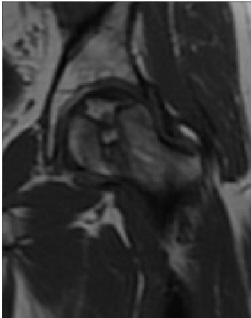
Example MRI appearance of avascular necrosis.
Image and video credits
T1 MRI of avascular necrosis of the femoral head (opens in a new tab) — Fernando Ruiz Santiago, Alicia Santiago Chinchilla, Afshin Ansari, Luis Guzmán Álvarez, Maria del Mar Castellano García, Alberto Martínez Martínez, and Juan Tercedor Sánchez. CC BY 4.0 (opens in a new tab).
Hip Anatomy and Blood Supply
Your hip is a ball-and-socket joint. The ball is the top of the thigh bone (femoral head) and fits into the socket of the pelvis.
The femoral head receives blood from small arteries (medial and lateral femoral circumflex arteries). If these blood vessels are injured, blocked, or narrowed, less blood reaches the bone. Over time:
- Bone cells under the cartilage begin to die.
- The bone can soften and lose its round shape.
- The smooth joint surface may cave in or collapse.
- This can lead to pain, stiffness, and eventually arthritis.
Causes and Risk Factors
Sometimes AVN has a clear cause; other times, no single cause is found. Factors that increase risk include:
- Injury (trauma)
- Hip dislocations
- Hip fractures that disrupt blood vessels
- Medicines and substances
- Long-term or high-dose corticosteroid (steroid) medicines
- Heavy alcohol use over time
- Medical conditions
- Sickle cell disease
- Lupus and other autoimmune diseases
- Blood clotting disorders
- Organ transplantation
- Other factors
- Most often affects adults between 40–65 years old
- More common in people who are assigned male at birth
Having these risk factors does not mean you will definitely develop AVN, but it may raise your chances.
Common Symptoms
Symptoms can start slowly and may be mild at first. Common symptoms include:
- Aching pain in the groin, buttock, or side of the hip that may spread to the thigh
- Pain that worsens with standing, walking, or climbing stairs
- Pain that later may appear even at rest or at night
- Stiffness or a feeling of catching in the hip
- Limping or difficulty putting weight on the leg
Some people have few or no symptoms in the early stages. Because early treatment can help protect the joint, tell your care team about new or ongoing hip pain, even if it seems mild.
How AVN Is Diagnosed
Early diagnosis can help preserve the hip joint. Your evaluation may include:
- Medical history and physical exam
- Questions about your pain, activity level, and risk factors (such as steroid use, alcohol use, or blood disorders)
- Checking hip motion, strength, and the way you walk (gait)
- X-rays
- Often the first imaging test
- May look normal in early AVN
- Later can show changes in bone density, shape, or collapse of the femoral head
- MRI
- The most sensitive test for early AVN
- Shows changes in the bone marrow and early damage before X-rays do
- CT scan
- Gives detailed images of the bone’s shape and structure
- Helpful for planning surgery if needed
You may not need every test. Your care team will choose the studies that make the most sense for your situation.
Nonsurgical Treatment Options
Nonsurgical (non-operative) treatments aim to reduce pain, protect the bone, and slow the progression of AVN, especially in earlier stages. These treatments may include:
- Activity changes
- Limiting high-impact activities (running, jumping)
- Shortening standing and walking time if possible
- Limited weight bearing
- Using crutches, a cane, or a walker to reduce stress on the hip
- Following your care team’s instructions about how much weight you can safely put on the leg
- Medications
- Pain relievers such as nonsteroidal anti-inflammatory drugs (NSAIDs) when appropriate
- Other medications (such as bisphosphonates) have been studied to slow bone loss, but they are not right for everyone and may not stop AVN from progressing
- Physical therapy
- Gentle stretching to maintain hip motion
- Strengthening exercises for the core and surrounding muscles to support the joint
- Balance and gait training to reduce limping and strain on the hip
These options may ease symptoms and slow damage, especially early on. However, many people with progressing AVN eventually need a surgical procedure to prevent or manage collapse and arthritis.
Surgical Treatment Options
Surgery is usually considered when:
- Pain is significant or limits your daily activities
- Imaging shows moderate or advanced damage to the femoral head
- Nonsurgical treatments have not provided enough relief
The type of surgery depends on how much the bone is weakened, its shape, and your age and activity level.
Common surgical options include:
- Core decompression
- A surgeon drills one or more small channels into the femoral head
- This can lower pressure inside the bone and encourage new blood flow
- Sometimes combined with bone graft or bone marrow-derived cells to support healing
- Often used in earlier stages before the bone has collapsed
- Vascularized bone grafting or free fibular graft
- Damaged bone is removed and replaced with healthy bone, often taken from another part of the body
- Blood vessels are connected to bring a new blood supply to the femoral head
- Aims to support the bone and delay or avoid joint collapse
- Osteotomy
- The bone is cut and repositioned to shift weight away from the damaged area
- Can help preserve the joint in selected patients
- Total hip arthroplasty (hip replacement)
- Damaged bone and cartilage in the hip are removed and replaced with artificial parts
- Typically recommended for advanced collapse and arthritis or when other options are unlikely to succeed
Your surgeon will recommend a procedure based on the stage of AVN, your bone quality, your overall health, and your goals.
Recovery and Long-Term Outlook
Recovery and outcomes vary depending on the stage of AVN, the type of treatment, and your overall health. General expectations include:
- After core decompression or grafting
- Expect to use crutches or a walker for weeks to months to protect the healing bone
- Pain often lessens as pressure decreases and blood flow improves
- It may take several months to know how well the procedure has helped
- After hip replacement
- Hospital stay is usually short
- Standing and walking with support often begin within a day or two
- Most people notice steady improvements in pain and function over the next few months
- Many can return to low-impact activities such as walking, swimming, or cycling, as advised by their surgeon
- Physical therapy and follow-up
- Your care team may recommend physical therapy to restore strength, motion, and balance
- Regular follow-up visits and X-rays help monitor healing and the health of the hip (or implant)
While AVN can be serious, early diagnosis and appropriate treatment can improve pain and help maintain or restore function.
When to Call or Seek Urgent Help
Contact your care team promptly if you experience:
- Sudden worsening hip pain or a new, severe pain
- New or increasing difficulty putting weight on the leg
- A change in the way you walk that happens quickly
After surgery, call your surgeon or care team right away if you notice:
- Fever or chills
- Redness, warmth, drainage, or a bad smell near the incision
- Increasing swelling of the hip, thigh, or leg
- Numbness, tingling, or weakness in the leg or foot
- Sudden chest pain, shortness of breath, or coughing up blood (call emergency services right away)
If you are ever unsure whether a symptom is urgent, it is safer to call your care team or local emergency services for guidance.
Prevention and Lifestyle
You may not be able to prevent every case of AVN, but some steps can lower risk or protect your bones:
- Use corticosteroid (steroid) medicines only as prescribed, at the lowest effective dose and for the shortest time needed.
- Limit alcohol use and avoid heavy drinking.
- Do not smoke or vape nicotine, as it can reduce blood flow and harm bone healing.
- Support bone health with:
- Adequate calcium and vitamin D intake, as advised by your clinician
- Weight-bearing activities (such as walking) when safe for your hips
- Seek early medical evaluation for:
- Hip pain after a fall or other injury
- Hip pain if you have risk factors such as long-term steroid use, heavy alcohol use, sickle cell disease, or other blood disorders
Talk with your healthcare team before starting or changing any exercise program or supplements.
Sources
References for further reading about this condition or procedure.
- Osteonecrosis of the Hip (opens in a new tab)
American Academy of Orthopaedic Surgeons (AAOS), OrthoInfo