Hip Core Decompression
Core decompression creates small channels in the ball of the hip to reduce pressure in bone affected by avascular necrosis.
Educational content only • Not a substitute for medical advice • For emergencies call 911
What This Procedure Is
Core decompression is a surgery used to treat avascular necrosis (AVN), also called osteonecrosis, in the hip before the ball of the joint has collapsed. In AVN, part of the bone loses blood flow, becomes weak, and can flatten over time.
The goal of core decompression is to lower pressure inside the bone and create a path for healing. This may improve pain and may delay or prevent the need for a total hip replacement in some patients.
Anatomy and imaging
These illustrations and imaging examples can help you understand the anatomy. They do not show your diagnosis.
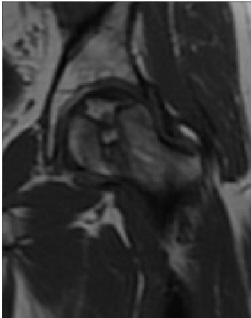
Example MRI appearance of avascular necrosis.
Image and video credits
T1 MRI of avascular necrosis of the femoral head (opens in a new tab) — Fernando Ruiz Santiago, Alicia Santiago Chinchilla, Afshin Ansari, Luis Guzmán Álvarez, Maria del Mar Castellano García, Alberto Martínez Martínez, and Juan Tercedor Sánchez. CC BY 4.0 (opens in a new tab).
Why It May Be Recommended
Core decompression may be recommended when:
- AVN is causing hip or groin pain
- imaging shows AVN in the femoral head (the ball at the top of the thigh bone)
- the hip joint surface is still mostly round and has not had major collapse
- your surgeon wants to try to preserve your natural hip joint
This procedure is usually more helpful in earlier AVN. If the bone has already collapsed or the hip already has advanced arthritis, a different surgery may be more likely to help.
What the Surgery Can and Cannot Do
Core decompression can:
- lower pressure inside the damaged bone
- sometimes reduce pain
- sometimes slow or delay worsening of AVN
- sometimes delay the need for hip replacement
Core decompression cannot:
- guarantee that the bone will fully recover
- reliably fix advanced collapse or advanced arthritis
- prevent future surgery in every patient
What Happens During the Procedure
At a high level, the surgery usually involves these steps:
- You receive anesthesia so you are comfortable. This is usually general anesthesia or a regional anesthetic.
- The surgeon makes a small incision near the upper thigh.
- Using fluoroscopy (live X-ray guidance), the surgeon places a small drill into the damaged area of the femoral head.
- One or more small channels are made in the bone to relieve pressure and encourage healing.
- In some cases, the surgeon places bone graft, a bone substitute, or another supportive material into the channel.
- The incision is closed and covered with a dressing.
Many patients go home the same day, although some may stay overnight depending on the plan and overall health.
Common Questions Before Surgery
- Will I need crutches or a walker? Usually yes. Most patients need protected walking for several weeks so the bone can heal.
- How long will I be on limited weight bearing? Often about 6 to 12 weeks, but the exact plan varies.
- Will I need physical therapy? Many patients do, although the timing and amount depend on the surgeon's instructions.
- When can I drive? Not until you can safely control the vehicle and are no longer taking opioid pain medicine. It may take longer if the right hip was treated.
- When can I return to work? Desk work may be possible in a few weeks for some people. Jobs with lifting, climbing, prolonged standing, or impact activity usually take longer.
- What should I ask about before surgery? Ask about blood thinners, diabetes medicines, anti-inflammatory medicines, supplements, nicotine use, and what help you may need at home after surgery.
- Could I still need a hip replacement later? Yes. Some patients still need more surgery if AVN continues to progress.
Recovery and Return to Activity
Right After Surgery
It is common to have:
- soreness in the hip or thigh for several days
- mild swelling or bruising
- a small dressing over the incision
- temporary use of crutches or a walker
Pain usually improves gradually. Your team may also recommend ice, leg elevation, and gentle exercises.
General Recovery Timeline
Recovery varies, but many patients can expect:
- first few days: rest, pain control, wound care, and short walks with support
- first 6 to 12 weeks: limited or protected weight bearing, depending on the surgical plan
- first few weeks: gradual return to light daily activities as comfort improves
- about 1 to 3 weeks: possible return to desk work or school for some patients
- about 3 months or more: many routine activities are easier, but full recovery may take longer
- 3 to 6 months or longer: heavier work, running, and sports only after your surgeon says the bone has healed enough
Follow-up visits and repeat imaging are important. They help your surgeon see how the bone is healing and decide when it is safe to increase activity.
Risks and Possible Complications
Possible risks include:
- infection
- bleeding
- blood clots
- fracture of the femoral neck
- nerve or blood vessel injury
- ongoing pain or stiffness
- incomplete pain relief
- progression of AVN, including collapse of the femoral head
- need for another surgery, including hip replacement
- anesthesia-related problems
These problems are not common, but they are important to understand before surgery.
When to Call the Office
Call your surgeon's office promptly if you have:
- fever over 101°F (38.3°C)
- redness, warmth, drainage, bad odor, or opening at the incision
- pain that is getting worse instead of better
- new numbness or tingling in the leg or foot
- calf pain or calf swelling
- trouble following your weight-bearing plan because of pain or weakness
- a fall onto the operated hip
When to Seek Urgent Care
Seek urgent care right away if you have:
- chest pain
- shortness of breath
- coughing up blood
- sudden severe hip pain after a fall or twist
- an inability to move the leg or put any weight on it when you could before
- a foot that becomes cold, pale, blue, or hard to move
If you are not sure whether a symptom is urgent, contact your surgical team.
Rehabilitation instructions after referral care
Follow the instructions and rehabilitation protocol from the surgeon who performs your operation.
Sources
References for further reading about this condition or procedure.
- Osteonecrosis of the Hip (opens in a new tab)
American Academy of Orthopaedic Surgeons (AAOS), OrthoInfo