Hip Resurfacing
Hip resurfacing covers the ball of the hip with a metal cap and replaces the socket surface.
Educational content only • Not a substitute for medical advice • For emergencies call 911
What It Is
Hip resurfacing is a type of hip replacement surgery. Instead of removing the entire ball at the top of the thighbone, the surgeon trims and smooths it, then places a metal cap over it. The damaged socket is replaced with a metal cup.
The goal is to reduce pain and improve movement while keeping more of your own bone than a standard total hip replacement. Hip resurfacing is used less often than it was in the past because metal-on-metal implants can release small metal particles and ions over time. For carefully selected patients, it can still be a reasonable option.
Anatomy and imaging
These illustrations and imaging examples can help you understand the anatomy. They do not show your diagnosis.
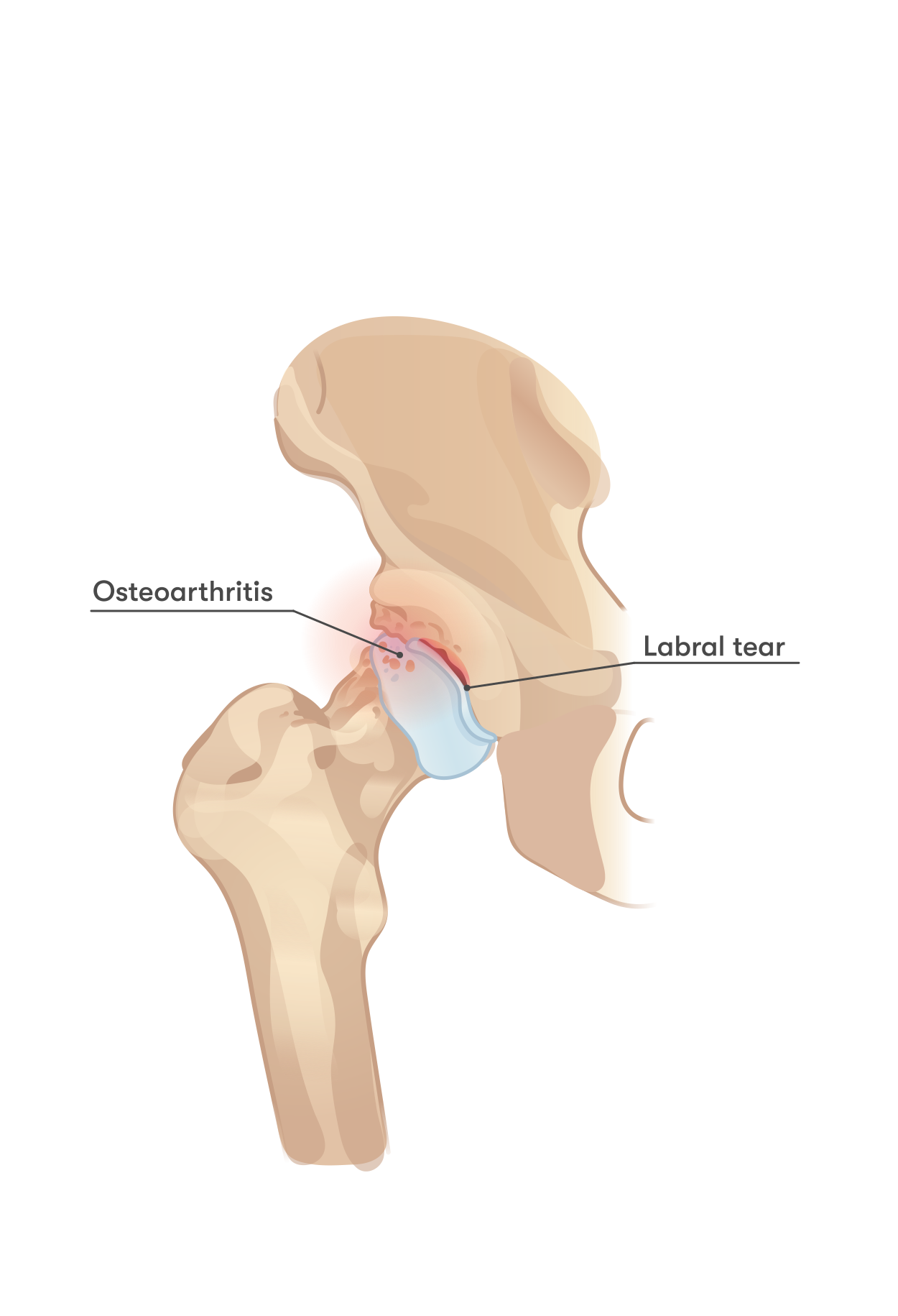
Simplified illustration of hip osteoarthritis.
Image and video credits
Hip osteoarthritis (opens in a new tab) — InjuryMap. CC BY-SA 4.0 (opens in a new tab).
Why It May Be Recommended
Your surgeon may discuss hip resurfacing if you have severe hip arthritis or other hip damage that causes:
- hip or groin pain
- stiffness
- trouble walking, climbing stairs, or staying active
- symptoms that have not improved enough with medicines, injections, physical therapy, activity changes, or a cane or walker
Hip resurfacing is usually considered for selected younger, active adults with strong bone. It is not the best choice for everyone.
Who May Be a Good Candidate
You may be more likely to be considered if:
- your bone quality is strong
- the size and shape of your hip make the implant a good fit
- you hope to stay active after surgery
It may be less likely to be recommended if you have:
- osteoporosis or other weak bone
- large bone cysts or major damage to the femoral head
- certain kidney problems
- known metal allergy or sensitivity
- other factors that raise the risk of fracture or metal-related problems
Patients with smaller femoral heads, including many women, and people with weaker bone quality have had higher complication rates with hip resurfacing. Your surgeon will review your imaging, bone health, and overall medical history before recommending it.
What Happens During Surgery
Hip resurfacing is done in the operating room under spinal anesthesia, general anesthesia, or both. The surgery often takes about 1.5 to 3 hours.
At a high level, the surgeon will:
- make an incision to reach the hip joint
- move the ball of the hip out of the socket
- trim and shape the femoral head instead of removing it
- place a smooth metal cap over the femoral head
- remove damaged cartilage from the socket and place a metal cup in the pelvis
- put the joint back together and close the incision
Common Questions Before Surgery
- How long will I stay in the hospital? Many people go home the same day or within 1 to 4 days, depending on the surgeon, hospital plan, and how you are doing after surgery.
- Will I walk right after surgery? Usually yes. Most patients stand and take a few steps with help on the day of surgery or the next day.
- Will I need help at home? Usually yes for the first several days. It helps to arrange rides, meals, and help with stairs, bathing, and getting dressed.
- What equipment might I need? A walker, crutches, or cane are common. Some people also use a raised toilet seat or shower chair.
- When can I drive? Usually only after you are off opioid pain medicine, can get in and out of the car safely, and can react quickly. Ask your surgeon for a clear timeline.
- When can I go back to work? Desk work may be possible in several weeks. Jobs that involve lifting, climbing, or long hours on your feet often take longer.
- Will I need follow-up for the implant? Yes. Hip resurfacing implants need regular follow-up, often with X-rays and sometimes blood tests, because metal-on-metal implants can release metal ions over time.
Recovery and Return to Activity
Most people start moving soon after surgery. Pain, swelling, warmth, bruising, and tiredness are common at first.
In general:
- you may use a walker, crutches, or cane for days to weeks
- physical therapy or a home exercise program helps restore strength and movement
- blood thinners, ankle pumps, and walking help lower the risk of blood clots
- basic daily activities often improve by about 6 weeks
- recovery continues for several months as strength, balance, and stamina come back
- higher-impact sports or heavy exercise should wait until your surgeon says it is safe
Follow the instructions from your surgical team about weight-bearing, wound care, bathing, and when to stop using assistive devices.
Risks and Possible Complications
All surgery has risks. With hip resurfacing, the main risks include:
- Femoral neck fracture: The bone just below the metal cap can crack or break, which may require conversion to a standard total hip replacement.
- Metal wear and metal ions: Metal-on-metal implants release tiny particles and ions. In some people this can irritate the tissue around the hip and may lead to pain, swelling, loosening, or the need for more surgery.
- Implant loosening or failure: The cap or cup may wear out, shift, or stop working well over time.
- Dislocation: The ball can come partly or fully out of the socket.
- Infection: This can involve the incision or the deeper joint.
- Blood clots: Clots can form in the leg and can become dangerous if they travel to the lungs.
- Nerve or blood vessel injury: Uncommon, but possible.
- Differences in leg length, limp, or ongoing pain: Some patients still notice these problems after surgery.
- Anesthesia problems, bleeding, or wound healing problems: General risks with most major operations.
When to Call the Office
Call your surgical team if you have:
- fever, chills, or feeling increasingly unwell
- drainage from the incision, spreading redness, or wound opening
- pain, swelling, or stiffness that is getting worse instead of better
- new groin or thigh pain
- clicking, grinding, squeaking, or a feeling that the hip is unstable
- new calf pain or one-sided leg swelling
- a new rash, numbness, weakness, or a worsening limp
When to Seek Urgent Care
Seek urgent care or call 911 right away if you have:
- chest pain
- shortness of breath
- coughing up blood
- sudden severe swelling in one leg
- a fall followed by severe hip pain
- a hip that looks out of place or a sudden inability to bear weight
Long-Term Follow-Up
Even if you feel well, keep your follow-up visits. Patients with hip resurfacing often need long-term monitoring because metal-on-metal implants can cause problems that may not be obvious early on. If you are doing well and have no symptoms, follow-up is often every 1 to 2 years, but your surgeon may want more frequent visits.
Your surgeon may recommend regular exams, X-rays, and sometimes blood tests. Tell other clinicians that you have a metal-on-metal hip implant if you are being evaluated for new health problems.
Rehabilitation instructions after referral care
Follow the instructions and rehabilitation protocol from the surgeon who performs your operation.
Sources
References for further reading about this condition or procedure.
- Hip Resurfacing (opens in a new tab)
American Academy of Orthopaedic Surgeons (AAOS), OrthoInfo
- Hip Osteoarthritis (opens in a new tab)
American Academy of Orthopaedic Surgeons (AAOS), OrthoInfo