Total Hip Replacement
Total hip replacement replaces the damaged ball and socket with implants.
Educational content only • Not a substitute for medical advice • For emergencies call 911
What It Is
Total hip replacement is surgery to replace a damaged hip joint with artificial parts. The hip is a ball-and-socket joint. In this surgery, the worn ball at the top of the thigh bone and the damaged surface of the socket are replaced with smooth metal, ceramic, and plastic parts.
The goal is to reduce pain, improve movement, and make daily activities easier. This surgery is usually considered when hip pain and stiffness are severe and other treatments have not helped enough.
Anatomy and imaging
These illustrations and imaging examples can help you understand the anatomy. They do not show your diagnosis.
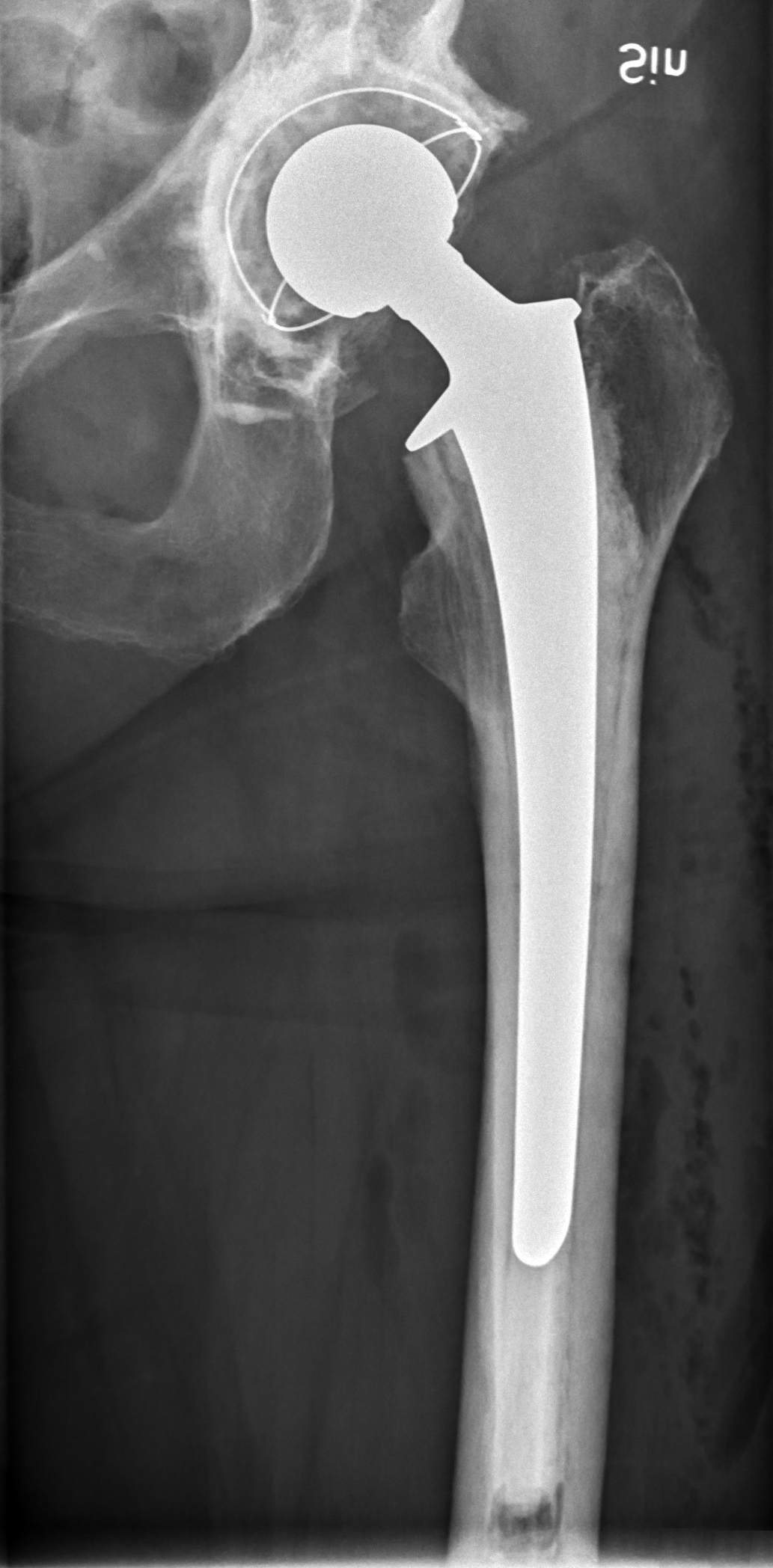
Illustrative X-ray; the implant shown may differ from the one used in an individual operation.
Image and video credits
Postoperative radiograph of hip prosthesis — anteroposterior view (opens in a new tab) — Mikael Häggström, M.D. CC0 1.0 (opens in a new tab).
Why It May Be Recommended
Your surgeon may discuss total hip replacement if you have:
- Hip pain that limits walking, stairs, sleep, or everyday activities
- Stiffness that makes it hard to put on shoes, get out of a chair, or get in and out of a car
- Joint damage from osteoarthritis, rheumatoid arthritis, avascular necrosis, or some fractures
- Ongoing symptoms even after medicines, injections, physical therapy, activity changes, or assistive devices
What Happens During Surgery
At a high level, the surgery usually involves these steps:
- You receive anesthesia so you are comfortable during the procedure
- The surgeon makes an incision near the hip
- Damaged bone and cartilage are removed
- A cup is placed into the hip socket
- A stem is placed into the thigh bone, and a new ball is attached
- The new ball fits into the new socket to create the new joint
- The incision is closed and covered with a dressing
The operation itself often takes about 1 to 2 hours. Your total time at the hospital is longer because it includes preparation, anesthesia, and recovery after surgery.
Planning Ahead Before Surgery
It helps to prepare for the first days at home.
- Ask which medicines to stop or continue before surgery, especially blood thinners, diabetes medicines, and anti-inflammatory medicines
- Ask when to stop eating and drinking before surgery
- Arrange a ride home and help with meals, bathing, dressing, pets, and chores
- Remove tripping hazards at home and keep often-used items within easy reach
- Ask whether you will need a walker, cane, raised toilet seat, or shower chair
- If you smoke or vape, ask about quitting before surgery, since this can lower the risk of healing problems
Your care team may also order blood work, imaging, or other pre-surgery testing.
Recovery After Surgery
Most people stand and take a few steps the same day or the day after surgery. Some go home the same day, while others stay in the hospital for 1 to 3 days. This depends on overall health, pain control, and how safely you can move.
In the first few weeks, it is common to have:
- Soreness, swelling, bruising, and tiredness
- Pain medicine and icing to manage discomfort
- Blood clot prevention, such as medicine, walking, or compression devices
- A walker, crutches, or cane for support
- Home exercises or physical therapy
Typical recovery ranges are:
- Walking with help: within 1 day for many patients
- Switching from walker or crutches to a cane: often over days to weeks
- Walking without an aid: often within a few weeks, but sometimes longer
- Driving: often after a few weeks, once you are off opioid pain medicine and can safely control the leg
- Return to desk work: often about 2 to 6 weeks
- Return to heavier work: often several weeks to a few months
- Ongoing improvement: usually over 3 to 6 months, with some improvement continuing up to a year
Some people are given temporary hip precautions, such as avoiding deep bending, twisting, or crossing the legs. These instructions vary, so follow the guidance from your own surgeon.
High-impact activities such as running and jumping are usually discouraged after hip replacement.
Risks and Possible Complications
All surgery has risks. Many people do well, but complications can happen.
Possible risks include:
- Infection in the incision or around the new joint
- Blood clots in the leg or lungs
- The new hip coming out of place (dislocation)
- A small difference in leg length
- Fracture of nearby bone
- Injury to nerves or blood vessels
- Bleeding, stiffness, or ongoing pain
- Wear, loosening, or failure of the implant over time
- Problems related to anesthesia
Keeping follow-up visits and following activity, wound-care, and medicine instructions can help lower some risks.
When to Call the Office or Seek Urgent Help
Call your surgeon or care team right away if you have:
- Fever over 101 F (38.3 C)
- New or worsening redness, warmth, swelling, or drainage at the incision
- Pain that suddenly gets worse or is not controlled by prescribed medicine
- Calf pain, swelling, or warmth
- Trouble moving the leg or bearing weight when you were able to do so before
- Questions about medicines, the dressing, or activity limits
Seek urgent care or call emergency services right away if you have:
- Chest pain
- Shortness of breath
- Fainting
- Heavy bleeding
- Sudden severe hip pain with the leg looking shorter, turned oddly, or feeling like the joint has popped out of place
Common Questions Patients Often Have
- Will I need help at home? Usually yes. Many people need help for at least several days with meals, bathing, dressing, and chores.
- How painful is recovery? Pain is expected at first, but it is usually managed with medicine, ice, movement, and time.
- Will I need physical therapy? Many patients do home exercises, physical therapy, or both. Your surgeon will tell you what is recommended for you.
- When can I shower? This depends on your dressing and incision. Ask your care team for exact instructions.
- When can I drive? Usually after a few weeks, when you are no longer taking opioid pain medicine and can safely brake and get in and out of the car.
- When can I return to work? Light or desk work may be possible in 2 to 6 weeks. Jobs that require lifting, climbing, or long periods on your feet often take longer.
- How long does the new hip last? Many hip replacements last for many years, but no implant lasts forever. Some people may need another surgery later.
- Will I have follow-up visits? Yes. Follow-up visits help your surgeon check healing, movement, and the position of the implant.
Rehabilitation instructions after referral care
Follow the instructions and rehabilitation protocol from the surgeon who performs your operation.
Sources
References for further reading about this condition or procedure.
- Total Hip Replacement (opens in a new tab)
American Academy of Orthopaedic Surgeons (AAOS), OrthoInfo
- Hip Replacement Surgery (opens in a new tab)
MedlinePlus, U.S. National Library of Medicine