Patellar Tendon Tear
A patellar tendon tear damages the tendon connecting the kneecap to the shinbone.
Educational content only • Not a substitute for medical advice • For emergencies call 911
What It Is
The patellar tendon is the strong band of tissue that connects the bottom of the kneecap to the shinbone. It helps you straighten the knee so you can walk, climb stairs, stand up, and kick.
A patellar tendon tear means this tendon has been damaged. A partial tear means some fibers are still connected. A complete tear means the tendon is fully torn, and the knee may no longer straighten normally. This is different from patellar tendinitis or "jumper's knee," which is irritation from overuse rather than a full tear.
Anatomy and imaging
These illustrations and imaging examples can help you understand the anatomy. They do not show your diagnosis.
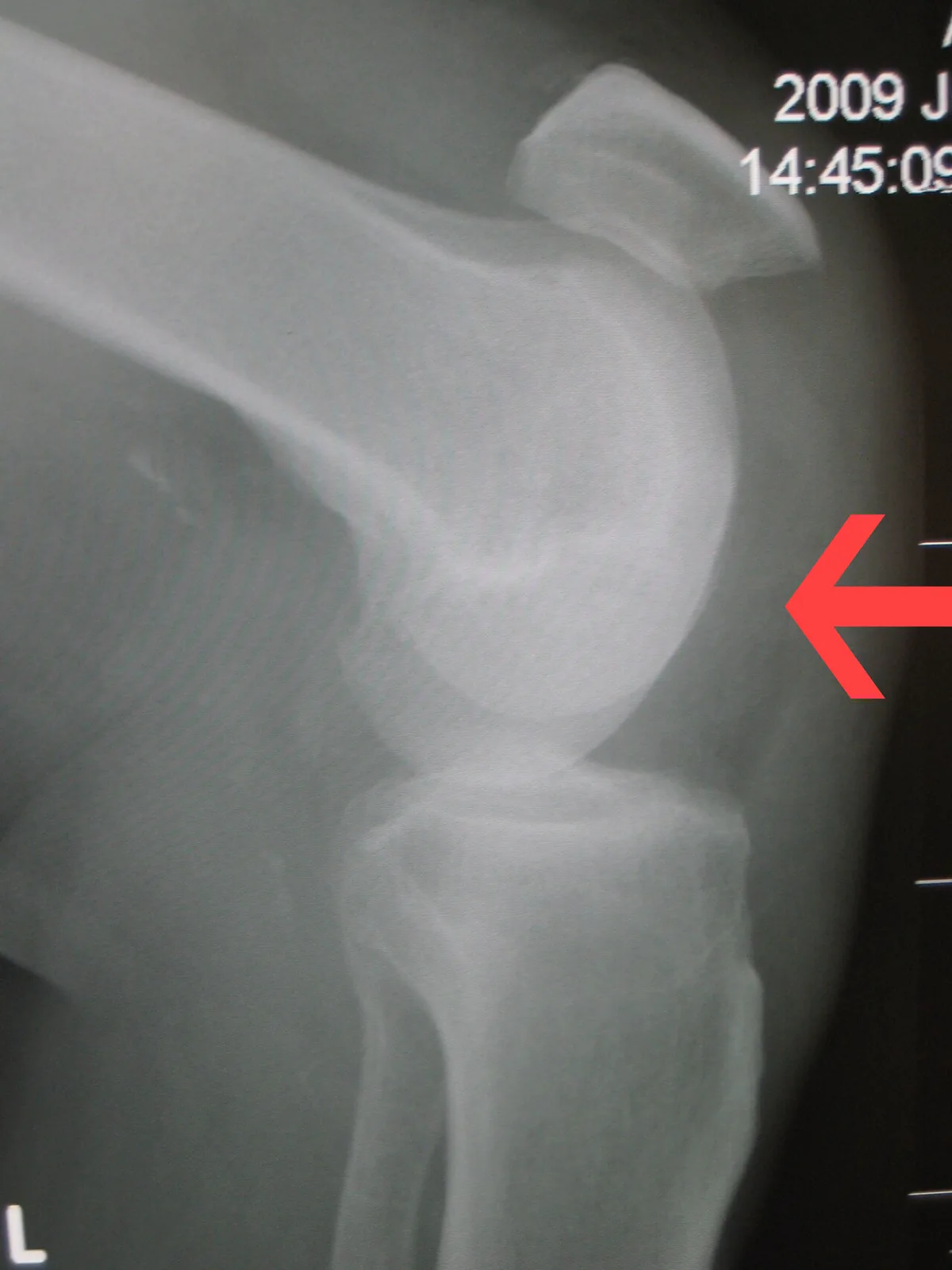
Example X-ray finding after patellar tendon rupture.
Image and video credits
Patellar tendon rupture (opens in a new tab) — James Heilman, M.D. CC BY-SA 3.0 (opens in a new tab). Modification: Resized and converted from JPEG to WebP for web delivery.
Common Symptoms
People with a patellar tendon tear may notice:
- A pop or tearing feeling when the injury happens
- Pain and swelling at the front of the knee
- Trouble straightening the knee
- Trouble lifting the leg straight while lying down
- A feeling that the knee gives way
- Bruising or tenderness below the kneecap
- A change in kneecap position, with the kneecap sitting higher than usual
A complete tear often causes major weakness right away.
How It Happens
This injury often happens when the thigh muscles tighten forcefully while the knee is bent, such as during:
- Landing from a jump
- Missing a step or stumbling
- Sudden stopping or change of direction
- A direct blow to the front of the knee
Risk Factors
Some tears happen in a tendon that was already weakened. Risk factors include:
- Long-standing patellar tendinitis
- Prior steroid injections around the tendon
- Anabolic steroid use
- Diabetes, chronic kidney disease, rheumatoid arthritis, lupus, or other conditions that can weaken tendons
- Prior knee surgery or infection near the tendon
How Diagnosis Is Made
Diagnosis usually starts with your story and a physical exam. A clinician may check for swelling, tenderness, a gap in the tendon, and whether you can do a straight-leg raise.
Imaging may include:
- X-rays to look for fractures and see whether the kneecap is sitting higher than expected
- MRI to show whether the tear is partial or complete and how much of the tendon is involved
- Ultrasound in some cases to look at the tendon more quickly
Nonsurgical Care
Nonsurgical treatment is most often used for small partial tears when you can still straighten the knee. Most complete tears do not heal well without surgery.
Nonsurgical care may include:
- A brace or cast to keep the knee straight while the tendon heals
- Crutches for a period of time, if needed
- Ice, elevation, and rest
- Pain medicine as directed by your clinician
- Physical therapy once healing has started, with gradual motion and strengthening
Regular follow-up matters. Even when a partial tear heals, some people still notice weakness, stiffness, or pain with heavier activity.
When Surgery May Be Discussed
Surgery is commonly discussed for:
- Complete tears
- Large partial tears
- Ongoing weakness or poor knee function after nonsurgical treatment
During surgery, the tendon is repaired and reattached, often with strong stitches and sometimes anchors or other fixation. If the tear is older or the tissue is weak, a graft may be used to strengthen the repair.
Early treatment matters. Waiting too long can make the tendon harder to repair and recovery more difficult.
Recovery and What to Expect
Recovery takes time. Most people need a brace for a period of time and a structured physical therapy program.
General recovery expectations:
- Pain and swelling usually improve gradually over the first several weeks
- Walking improves step by step as the brace is adjusted and strength returns
- Return to desk work is often earlier than return to climbing, kneeling, heavy labor, running, or sports
- Physical therapy often continues for several months
- After surgery, recovery for higher-impact activity often takes 6 to 12 months
- Partial tears treated without surgery can also take several months to settle
Many people recover good function, especially when the tear is treated early and rehab is followed carefully. Some people still have lingering stiffness, weakness, or soreness with heavy activity.
When to Seek Urgent Help
Get urgent medical care after a new injury if:
- You cannot straighten the knee
- You cannot lift the leg straight
- You cannot bear weight safely
- The knee is badly swollen, looks deformed, or the pain is severe
Get urgent help right away during recovery if you have:
- Chest pain or shortness of breath
- Sudden calf pain or calf swelling
- Rapidly worsening pain or swelling
- New numbness, a cold foot, or major color change in the leg or foot
When to Call the Office
Call your care team promptly if:
- Pain is not improving as expected
- The brace no longer fits or is causing skin problems
- You have fever, increasing redness, warmth, or drainage around an incision
- You fall on the injured leg
- You notice new weakness or cannot move the knee as well as before
- You are not sure when it is safe to increase activity
Prevention
Some tears cannot be prevented, but risk may be lowered by:
- Treating patellar tendinitis early
- Building leg strength gradually
- Warming up before sports
- Using good jumping and landing mechanics
- Avoiding repeated steroid injections into or around the tendon unless your clinician specifically recommends them
Sources
References for further reading about this condition or procedure.
- Patellar Tendon Tear (opens in a new tab)
American Academy of Orthopaedic Surgeons (AAOS), OrthoInfo