Patellar Tendon Repair
Patellar tendon repair reconnects the torn tendon between the kneecap and shinbone.
Educational content only • Not a substitute for medical advice • For emergencies call 911
What This Surgery Is
Patellar tendon repair is surgery to fix a torn patellar tendon. This tendon connects the kneecap (patella) to the shinbone (tibia) and helps you straighten your knee so you can walk, climb stairs, and get up from a chair.
A tear may be partial or complete. Complete tears usually make it very hard or impossible to actively straighten the knee. They often need surgery to restore knee function.
Anatomy and imaging
These illustrations and imaging examples can help you understand the anatomy. They do not show your diagnosis.
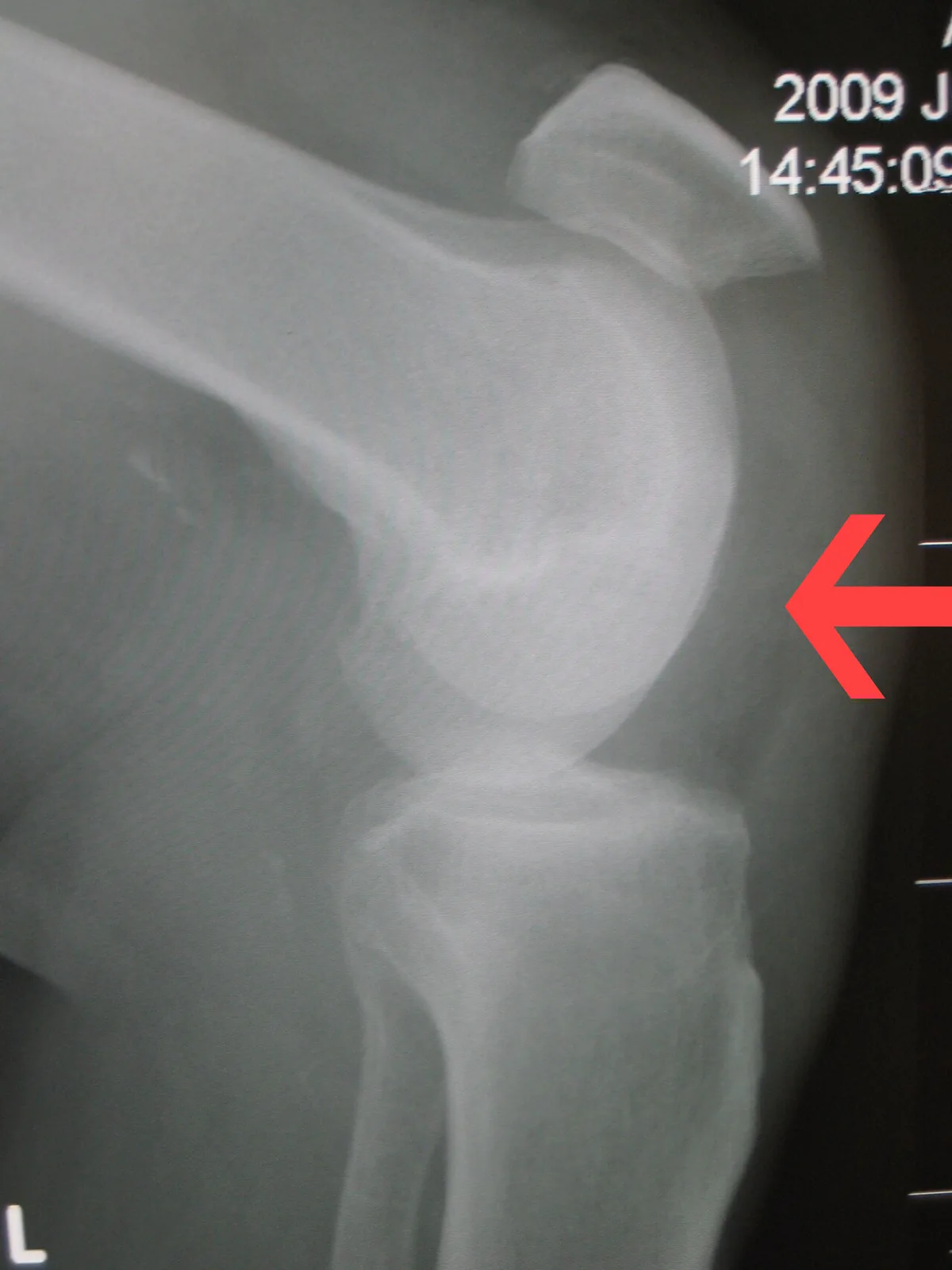
Example X-ray finding after patellar tendon rupture.
Image and video credits
Patellar tendon rupture (opens in a new tab) — James Heilman, M.D. CC BY-SA 3.0 (opens in a new tab). Modification: Resized and converted from JPEG to WebP for web delivery.
Why It May Be Recommended
Surgery may be recommended when:
- the patellar tendon is completely torn
- the knee cannot be actively straightened
- walking feels unsafe or very difficult
- the kneecap has shifted because the tendon is no longer attached normally
- a large partial tear has not improved enough with non-surgical treatment
Some partial tears can be treated without surgery. Your surgeon will look at the exam, imaging, and how well the knee still works.
What Happens During Surgery
At a high level, the procedure usually includes these steps:
- You receive anesthesia so you do not feel pain during surgery.
- The surgeon makes an incision over the front of the knee.
- Torn or unhealthy tissue is cleaned up so the repair can be made on stronger tissue.
- Strong stitches are placed in the tendon and used to reattach it to the kneecap, often through small bone tunnels or with anchors.
- If the tear is older or the tissue is weak, the repair may be reinforced with extra tissue or another supporting material.
- The incision is closed, and the knee is placed in a brace locked straight to protect the repair.
Common Questions Before Surgery
Is surgery usually done the same day?
Often, yes. Many patellar tendon repairs are outpatient procedures, which means you go home the same day. Some people stay overnight depending on the injury, pain control, or other medical needs.
What kind of anesthesia is used?
General anesthesia or regional anesthesia is commonly used. A nerve block may also be used to help with pain after surgery.
How long does surgery take?
The operation itself often takes about 1 to 2 hours, but the total time at the surgery center is longer because of check-in, anesthesia, and recovery room time.
Will I need help at home?
Usually yes, especially for the first few days. It helps to have someone drive you home, help with meals, and make sure you can move around safely.
What should I ask about before surgery?
Helpful questions include:
- How long will I need the brace and crutches?
- When can I shower?
- When can I drive?
- When can I return to work or school?
- When will physical therapy start?
- Which medicines should I stop or adjust before surgery?
Tell your care team about all medicines, supplements, nicotine use, and any history of blood clots or problems with anesthesia.
Right After Surgery
After surgery, it is common to have:
- a brace locked straight
- crutches or a walker
- pain, swelling, and bruising around the knee
- a bulky dressing over the incision
- instructions to ice and elevate the leg
Your team will tell you how much weight you can put on the leg. This varies by the tear, the repair, and your surgeon's rehab plan.
Recovery and Rehabilitation
Recovery takes time. The tendon needs to heal, and the thigh muscles often become weak quickly after injury and surgery.
Typical recovery points include:
- First 2 weeks: Focus is on protecting the repair, controlling swelling, and caring for the incision.
- First 4 to 6 weeks: A brace and crutches are common. Knee bending is usually limited and increased gradually.
- Around 6 to 12 weeks: Motion often improves, and strengthening work becomes more active.
- Around 3 to 6 months: Walking and daily activities usually feel easier, but strength may still be coming back.
- Around 6 to 12 months: Return to running, sports, jumping, or heavy labor may be possible if healing and strength are good.
These are general ranges. Some people recover faster or slower. Going too fast can stress the repair, while not moving enough can lead to stiffness.
Work, driving, and activity
- Desk work or school: sometimes possible within 1 to 2 weeks, depending on pain, travel, and whether the leg can be elevated
- Driving: usually not until you are off opioid pain medicine and can safely control the leg; this often takes several weeks and may take longer after right-knee surgery
- Heavy work, climbing, kneeling, running, and sports: often require several months and sometimes 6 to 12 months
Risks and Possible Complications
All surgery has risks. With patellar tendon repair, possible complications include:
- infection
- bleeding
- blood clots in the leg
- knee stiffness or loss of motion
- ongoing pain or swelling
- weakness of the quadriceps muscle
- numbness near the incision
- scar tissue
- the tendon stretching out or tearing again
- problems related to anesthesia
Healing may be slower in people with conditions such as diabetes, kidney disease, inflammatory arthritis, or long-term steroid use. Nicotine use can also slow healing.
When to Call the Office
Call your surgeon or care team promptly if you have:
- fever or chills
- increasing redness, warmth, drainage, or bad smell from the incision
- pain or swelling that is getting worse instead of better
- calf pain, calf swelling, or calf warmth
- a sudden pop or sharp pain in the knee
- new trouble straightening the knee
- numbness, tingling, or unusual color changes in the foot
- trouble with the brace, dressing, or crutches
- questions about medicines, wound care, or activity limits
When to Seek Urgent Care
Seek urgent medical care right away, or call 911, for:
- chest pain
- shortness of breath
- sudden trouble breathing
- a foot that becomes cold, blue, or very pale
- severe bleeding
- severe pain with a major fall or new injury after surgery
Dr. Rizzo’s physical therapy protocols
These are my own rehabilitation protocols. Your operation, graft, and any additional repairs determine which one applies.
Patellar Tendon Repair Protocol
Use when your discharge instructions name patellar tendon repair.
Open protocol PDF (opens in a new tab)Sources
References for further reading about this condition or procedure.
- Patellar Tendon Tear (opens in a new tab)
American Academy of Orthopaedic Surgeons (AAOS), OrthoInfo