Pectoralis Major Tear
A pectoralis major tear injures the large chest muscle or its tendon, often during bench pressing or a forceful pushing movement.
Educational content only • Not a substitute for medical advice • For emergencies call 911
Overview
The pectoralis major is the large chest muscle used for pushing, hugging, and bringing the arm across the body. Its tendon is the strong tissue that connects the muscle to the upper arm bone.
A pectoralis major tendon tear means this tendon has been partly or completely torn, usually near where it attaches to the arm. This injury often happens during heavy lifting, especially the lowering phase of a bench press, but it can also happen during contact sports, a fall, or a sudden forceful movement.
This page is for general education. Your own care plan may differ.
Anatomy and imaging
These illustrations and imaging examples can help you understand the anatomy. They do not show your diagnosis.
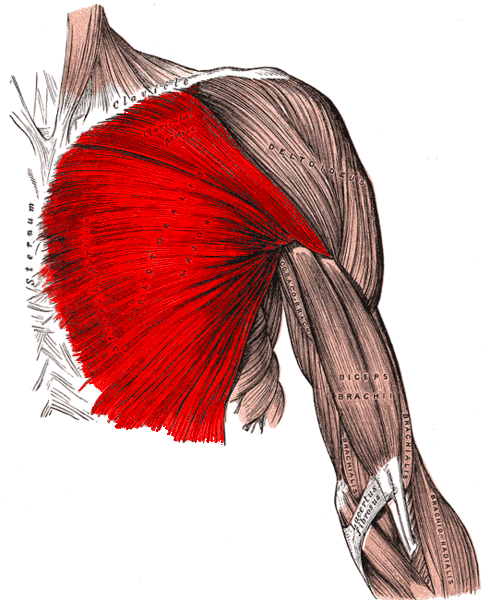
Anatomy of the pectoralis major muscle.
Image and video credits
Gray410 pectoralis major (opens in a new tab) — Arcadian; derivative by Lies Van Rompaey. Public domain (opens in a new tab).
What This Injury Is
Some tears are partial, which means only part of the tendon is damaged. Others are complete, which means the tendon has fully pulled away or torn through.
This injury can affect:
- Strength with pushing
- Bringing the arm toward the body
- Turning the arm inward
- The normal shape of the chest and front of the armpit
A complete tear usually does not reattach on its own.
Common Symptoms
People often notice:
- A sudden pop, snap, or tearing feeling in the chest or upper arm
- Immediate pain
- Weakness with pushing, lifting, or bringing the arm across the body
- Bruising on the chest, armpit, or inner upper arm
- Swelling
- A visible dip, gap, or change in chest shape
- Uneven appearance of the armpits or nipples compared with the other side
Many people cannot continue the workout or activity when the injury happens.
How It Happens and Risk Factors
This injury is most common with:
- Heavy weightlifting, especially bench press
- Football, wrestling, skiing, waterskiing, and other high-force sports
- Trying to catch yourself during a fall
- Direct trauma to the chest or shoulder
Risk factors include:
- Sudden large increases in lifting load
- Previous tendon injury
- Anabolic steroid use
- High-demand strength training
How Doctors Diagnose It
Diagnosis starts with your story and an exam. Your clinician may check:
- Where the pain and bruising are
- Strength with pushing and turning the arm inward
- Range of motion
- Whether the chest or armpit looks uneven
- Whether there is a gap where the tendon should be
Imaging may include:
- X-rays to look for a broken bone, a piece of bone pulled off with the tendon, or another injury
- MRI (magnetic resonance imaging) to show how much of the tendon is torn and where
- Ultrasound in some cases to confirm the tear
Prompt evaluation matters. If surgery is being considered, earlier diagnosis can make treatment planning easier.
Treatment
Nonsurgical Care
Nonsurgical treatment is often used first for:
- Partial tears
- People who do not need full pushing strength for work or sports
- People who prefer to avoid surgery or are not good surgical candidates
Care may include:
- Rest from lifting, pushing, and painful activity
- Ice to help with pain and swelling
- A sling for short-term comfort and protection
- Pain medicine if your clinician says it is safe for you
- Physical therapy to regain motion first, then strength
Nonsurgical care can reduce pain and improve daily function, but it may leave:
- Lasting weakness
- Reduced strength for heavy lifting
- A visible change in chest shape
When Surgery May Be Discussed
Surgery is more often discussed for:
- Complete tears
- Active people who want to regain as much strength as possible
- Jobs or sports that require heavy pushing or lifting
- Noticeable deformity of the chest or armpit
- Ongoing weakness or poor function after a trial of nonsurgical care
During surgery, the torn tendon is reattached to the upper arm bone. Your surgeon may use sutures, anchors, or buttons. In older or more complex tears, graft tissue may sometimes be needed.
Your surgeon will also review the possible downsides of surgery, such as infection, stiffness, numbness around the incision, or a re-tear.
Recovery and What to Expect
Recovery takes time whether treatment is surgical or nonsurgical.
In general:
- Pain and bruising improve first
- Simple daily activities return before sports or heavy lifting
- Physical therapy often lasts for several months
- Strength usually comes back more slowly than motion
After surgery, many people wear a sling at first. Therapy usually starts with protected motion, then gradual strengthening. Return to full activity often takes at least 6 months, and full strength may continue improving for a year or longer.
Even with good treatment, some people still notice:
- Mild weakness
- Tightness or soreness with heavy activity
- A small difference in chest shape
When to Call the Doctor or Seek Urgent Help
Call your doctor promptly if you have:
- A new pop or tear with bruising and weakness after lifting or sports
- Pain or weakness that is not improving
- Trouble using the arm for normal daily activities
- Concerns that the chest shape has changed
Call the office right away after treatment or surgery if you have:
- Fever
- Redness, warmth, or drainage from an incision
- Increasing swelling or pain instead of steady improvement
- New numbness or tingling
- Worsening weakness
Seek urgent medical care now if you have:
- Chest pain, shortness of breath, or fainting
- A hand or arm that becomes cold, pale, or very numb
- Severe swelling or rapidly worsening pain
Prevention
You may lower risk by:
- Warming up before lifting or sports
- Increasing weights gradually instead of making sudden jumps
- Using good bench press technique and a spotter when needed
- Stopping if you feel sudden sharp pain
- Building balanced shoulder and upper back strength
- Avoiding anabolic steroids
Sources
References for further reading about this condition or procedure.
- Pectoralis Tendon Tear (opens in a new tab)
American Academy of Orthopaedic Surgeons (AAOS), OrthoInfo