Arthroscopic Bankart Repair
A Bankart repair reattaches torn tissue at the front of the shoulder socket after a dislocation.
Educational content only • Not a substitute for medical advice • For emergencies call 911
What It Is
Arthroscopic Bankart repair is surgery to fix a tear in the front lower part of the shoulder labrum. The labrum is the ring of tissue around the shoulder socket that helps keep the ball of the upper arm bone in place.
A Bankart tear often happens after the shoulder dislocates toward the front. When this tissue is torn, the shoulder may feel loose, slip partly out of place, or dislocate again.
Anatomy and imaging
These illustrations and imaging examples can help you understand the anatomy. They do not show your diagnosis.
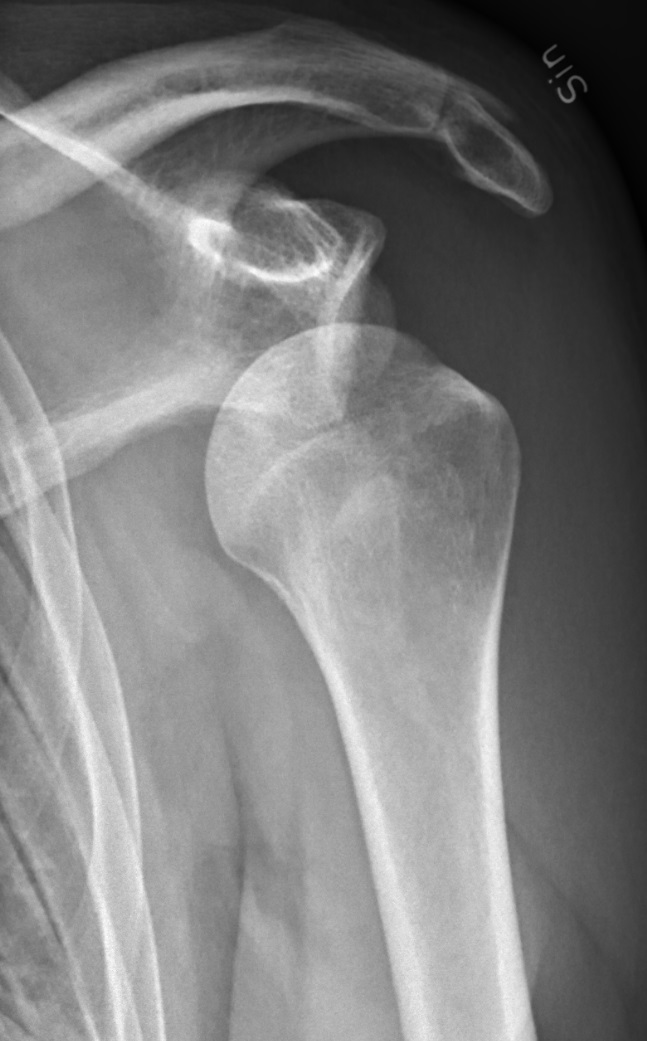
Example X-ray of a dislocated shoulder before reduction.
Image and video credits
Shoulder dislocation, anteroposterior before reduction (opens in a new tab) — Mikael Häggström, M.D. CC0 1.0 (opens in a new tab).
Why This Surgery May Be Recommended
Your surgeon may recommend this procedure if you have:
- Repeated shoulder dislocations
- A feeling that the shoulder is unstable or may slip out
- Pain or loss of confidence with sports, work, or daily activities
- A Bankart tear seen on exam or imaging
- Symptoms that continue despite rest, activity changes, bracing, or physical therapy
This surgery is usually used when the main problem is torn soft tissue. If there is significant bone loss or other damage in the shoulder, a different or additional procedure may be needed.
How the Procedure Is Done
Arthroscopic Bankart repair is usually done as outpatient surgery, so most people go home the same day.
At a high level, the surgery usually includes:
- General anesthesia so you are asleep during the procedure
- Sometimes a nerve block to numb the shoulder and arm for pain control after surgery
- A few small incisions around the shoulder
- A tiny camera called an arthroscope to look inside the joint
- Small instruments to clean the torn area and prepare it for healing
- Tiny anchors placed in the rim of the shoulder socket
- Stitches attached to those anchors to pull the labrum back into place
- Tightening of stretched tissue around the joint, if needed, to improve stability
The anchors are very small and are usually left in place.
Common Questions Before Surgery
Will I go home the same day?
Usually yes. Most arthroscopic Bankart repairs are outpatient procedures.
What should I do before surgery?
Follow your surgery center's instructions about:
- When to stop eating or drinking
- Which medicines to stop or continue
- When to arrive
- What to bring
Arrange for someone to drive you home. It also helps to have someone stay with you the first night.
What if I get sick before surgery?
Call the surgeon's office if you develop a fever, cold, flu-like symptoms, a rash, or a skin wound near the shoulder before surgery.
When will I start physical therapy?
This depends on the repair and your surgeon's plan, but therapy often starts in the first 1 to 2 weeks.
When can I drive again?
Usually not while you are wearing a sling, taking opioid pain medicine, or unable to safely control the wheel.
When can I go back to work or school?
That depends on your pain, which arm was operated on, and what your job or school day requires. Desk work or school may be possible within 1 to 2 weeks for some people. Jobs that involve lifting, climbing, pushing, pulling, or overhead work usually take longer.
Recovery and Return to Activity
Most people have soreness, swelling, and stiffness at first. If you receive a nerve block, your arm may feel numb or weak for several hours after surgery.
You will usually wear a sling for about 4 to 6 weeks to protect the repair. Your surgeon will tell you when you can remove it for bathing, dressing, and exercises.
Recovery is gradual:
- Early recovery focuses on pain control, swelling, and protecting the repair
- Physical therapy starts with gentle motion
- Strengthening is added later, once the repair has had time to heal
- Full recovery takes several months
Common time ranges are:
- Sling: often 4 to 6 weeks
- Light daily activities: as comfort allows, with the arm protected
- Desk work or school: often about 1 to 2 weeks
- Stronger exercise and heavier use of the arm: usually after a few months
- Return to many sports: often around 4 to 6 months
- Contact, collision, or heavy overhead sports: often 6 months or longer
Some athletes, especially throwing athletes, may need longer. Your own timeline depends on healing, shoulder stability, range of motion, strength, and the demands of your sport or job.
Risks and Possible Complications
Complications are not common, but they can happen. Risks include:
- Infection
- Bleeding
- Blood clots
- Stiffness or loss of some motion
- Numbness, tingling, or nerve injury
- Ongoing pain
- The repair not healing as expected
- The shoulder still feeling unstable or dislocating again
- Problems related to the anchors or stitches
- Risks from anesthesia
No surgery can guarantee that the shoulder will never dislocate again, especially after a new injury or a return to high-risk sports.
When to Call Your Care Team
Call the office promptly if you have:
- Fever over 101°F (38.3°C)
- Chills
- Increasing redness, warmth, swelling, or drainage at the incision sites
- Pain that is getting worse instead of better
- Numbness or weakness that does not improve after the nerve block should have worn off
- A shoulder that feels like it slipped, shifted, or partly dislocated
- Questions about your sling, medicines, or exercises
Seek urgent care right away if you have:
- Trouble breathing
- Chest pain
- Severe swelling in the arm or hand
- Fingers that look blue, very pale, or feel cold
- Heavy bleeding
- A new injury with obvious deformity or a shoulder that appears fully out of place
Dr. Rizzo’s physical therapy protocols
These are my own rehabilitation protocols. Your operation, graft, and any additional repairs determine which one applies.
Bankart Repair / Anterior Stabilization Protocol
Use when your discharge instructions name Bankart repair or anterior shoulder stabilization.
Open protocol PDF (opens in a new tab)Sources
References for further reading about this condition or procedure.
- Chronic Shoulder Instability (opens in a new tab)
American Academy of Orthopaedic Surgeons (AAOS), OrthoInfo
- Shoulder Arthroscopy (opens in a new tab)
American Academy of Orthopaedic Surgeons (AAOS), OrthoInfo