Latarjet Procedure
The Latarjet procedure moves a small piece of bone and its attached tendons to the front of the shoulder socket.
Educational content only • Not a substitute for medical advice • For emergencies call 911
What It Is
The Latarjet procedure is surgery used to make an unstable shoulder more stable and lower the chance of another dislocation. It is usually considered when the shoulder has dislocated more than once, when the front of the socket has lost bone, or when a previous soft-tissue stabilization surgery did not hold.
During surgery, a small piece of bone from the front of the shoulder blade, called the coracoid, is moved to the front of the shoulder socket, called the glenoid. The moved bone acts like a bumper, and the attached tendon adds a sling effect. Together, they help keep the ball of the shoulder in place.
This handout gives general information. Your surgeon may adjust the plan based on your shoulder, your bone loss, and your activity goals.
Anatomy and imaging
These illustrations and imaging examples can help you understand the anatomy. They do not show your diagnosis.
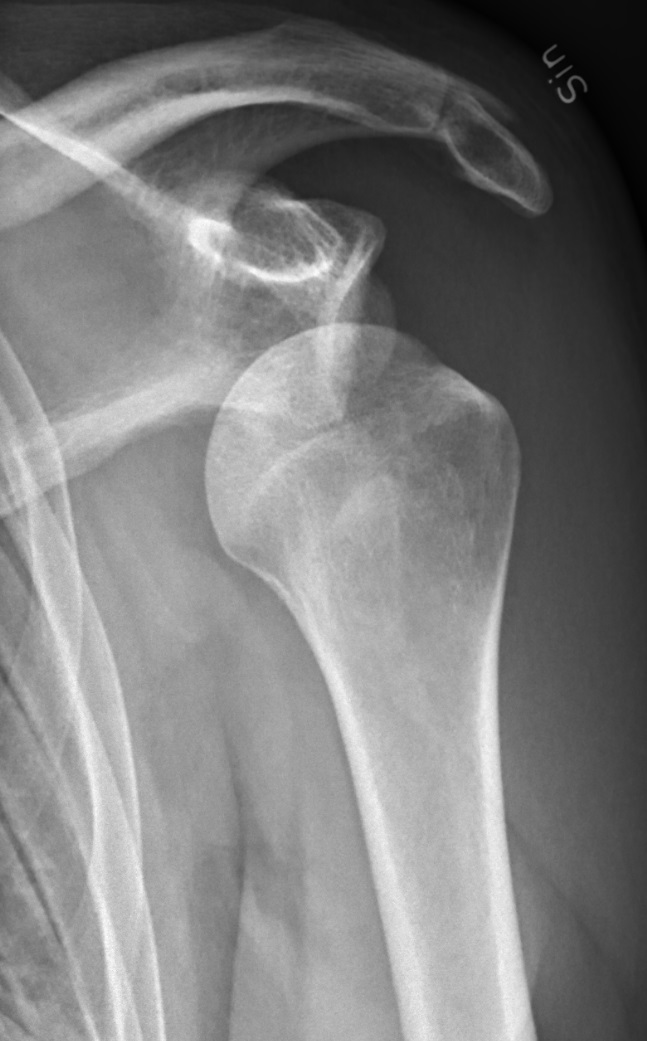
Example X-ray of a dislocated shoulder before reduction.
Image and video credits
Shoulder dislocation, anteroposterior before reduction (opens in a new tab) — Mikael Häggström, M.D. CC0 1.0 (opens in a new tab).
Why It May Be Recommended
- Repeated shoulder dislocations or a shoulder that keeps "slipping out"
- Bone loss at the front of the socket or a large bone injury from prior dislocations
- Ongoing instability after a prior labrum repair or other stabilization surgery
- A shoulder that needs a stronger bone-based repair because the risk of another dislocation is high
What Happens During Surgery
- You receive anesthesia so you are asleep during the surgery. Many patients also get a numbing block to help with pain afterward.
- The surgeon makes an incision at the front of the shoulder.
- A small piece of the coracoid bone is detached with its attached tendon.
- That bone is moved to the front edge of the shoulder socket and fixed in place with screws.
- The transferred bone and tendon help support the shoulder when the arm is raised and turned outward.
- The incision is closed, and your arm is placed in a sling.
Questions Patients Often Ask Before Surgery
- Will I go home the same day? Many people do. Some stay one night, depending on the surgery, pain control, and other health needs.
- What should I ask about my medicines? Ask your care team about blood thinners, diabetes medicines, weight-loss medicines, anti-inflammatory medicines, and supplements. Do not stop prescription medicines unless your team tells you to.
- Does nicotine matter? Yes. Smoking, vaping, and other nicotine products can slow bone healing and raise the risk of problems.
- Will I need help at home? Usually yes for the first few days, especially with dressing, bathing, meals, and rides.
- When can I drive? Usually not while you are in a sling, not while taking opioid pain medicine, and not until your surgeon says you can safely control the vehicle.
- Will the screws stay in? Usually yes. They are often left in place unless they cause irritation or another problem.
- What can I do to prepare? Arrange a ride home, plan for help during the first few days, wear a loose button-front shirt, and ask when to stop eating or drinking before surgery.
Right After Surgery
- You will wake up with your arm in a sling.
- Pain, swelling, bruising, and trouble sleeping are common at first.
- If a nerve block was used, your shoulder, arm, or hand may feel numb or weak for several hours.
- Many people go home the same day with instructions for ice, medicine, dressing care, and follow-up.
Recovery and Return to Activity
- The sling is commonly used for about 4 to 6 weeks.
- Keep your hand, wrist, and elbow moving unless your surgeon tells you not to. This helps prevent stiffness.
- Physical therapy usually starts with gentle motion after your surgeon says it is safe. Strengthening is added later.
- Keep the incision clean and dry. Do not soak the shoulder in a tub or pool until your care team says it is okay.
- Light daily activities below shoulder level may begin within a few weeks, but the shoulder still needs protection.
- Return to desk work or school is often possible within 1 to 2 weeks if pain is controlled and your surgeon allows it. Jobs with lifting, pushing, pulling, or overhead work usually take longer.
- Many patients return to more routine daily activities by about 3 months.
- Heavy lifting, contact sports, and overhead sports often require 4 to 6 months or longer, and should wait for surgeon clearance.
- It is common for the shoulder to keep improving for many months.
Risks and Possible Complications
- Infection, bleeding, or blood clots
- Stiffness or some loss of motion, especially when turning the arm outward
- Ongoing pain or a feeling that the shoulder is not fully normal yet
- Injury to nearby nerves or blood vessels
- The bone graft may not fully heal to the socket, may shift, or rarely may break
- The screws can irritate the area or may need removal later
- The shoulder can still become unstable again, though this surgery lowers that risk
- Arthritis can develop in the shoulder over time
When to Call the Office
- Fever or chills
- Increasing redness, warmth, swelling, or drainage from the incision
- Pain that is getting worse instead of better
- Numbness or weakness that is new or worsening after the nerve block should have worn off
- Trouble moving your fingers
- Questions about medicines, the sling, or the incision
Seek Urgent Care Now
- Chest pain or trouble breathing
- A hand or arm that becomes cold, pale, blue, or suddenly much more swollen
- Severe calf pain or swelling
- Heavy bleeding
- A sudden new shoulder deformity or a feeling that the shoulder has dislocated again
Dr. Rizzo’s physical therapy protocols
These are my own rehabilitation protocols. Your operation, graft, and any additional repairs determine which one applies.
A public Latarjet rehabilitation protocol is not available on this site. Follow the plan in your discharge instructions or contact Dr. Rizzo's team.
Sources
References for further reading about this condition or procedure.
- Chronic Shoulder Instability (opens in a new tab)
American Academy of Orthopaedic Surgeons (AAOS), OrthoInfo
- Innovations in the Treatment of Bone Loss in Anterior Instability (opens in a new tab)
American Orthopaedic Society for Sports Medicine (AOSSM)