Periacetabular Osteotomy (PAO)
A periacetabular osteotomy (PAO) repositions the hip socket so it covers the ball more fully.
Educational content only • Not a substitute for medical advice • For emergencies call 911
What PAO Is
Periacetabular osteotomy, or PAO, is a surgery used to treat hip dysplasia. In hip dysplasia, the hip socket is too shallow or angled in a way that does not cover the ball of the hip well. This can cause pain, a feeling of instability, labral injury, and early wear of the joint.
PAO is a joint-preserving surgery. That means the goal is to improve how your own hip fits and works, rather than replace it with an artificial joint. By turning the socket into a better position, PAO can improve coverage of the hip and reduce uneven pressure on the cartilage.
Anatomy and imaging
These illustrations and imaging examples can help you understand the anatomy. They do not show your diagnosis.
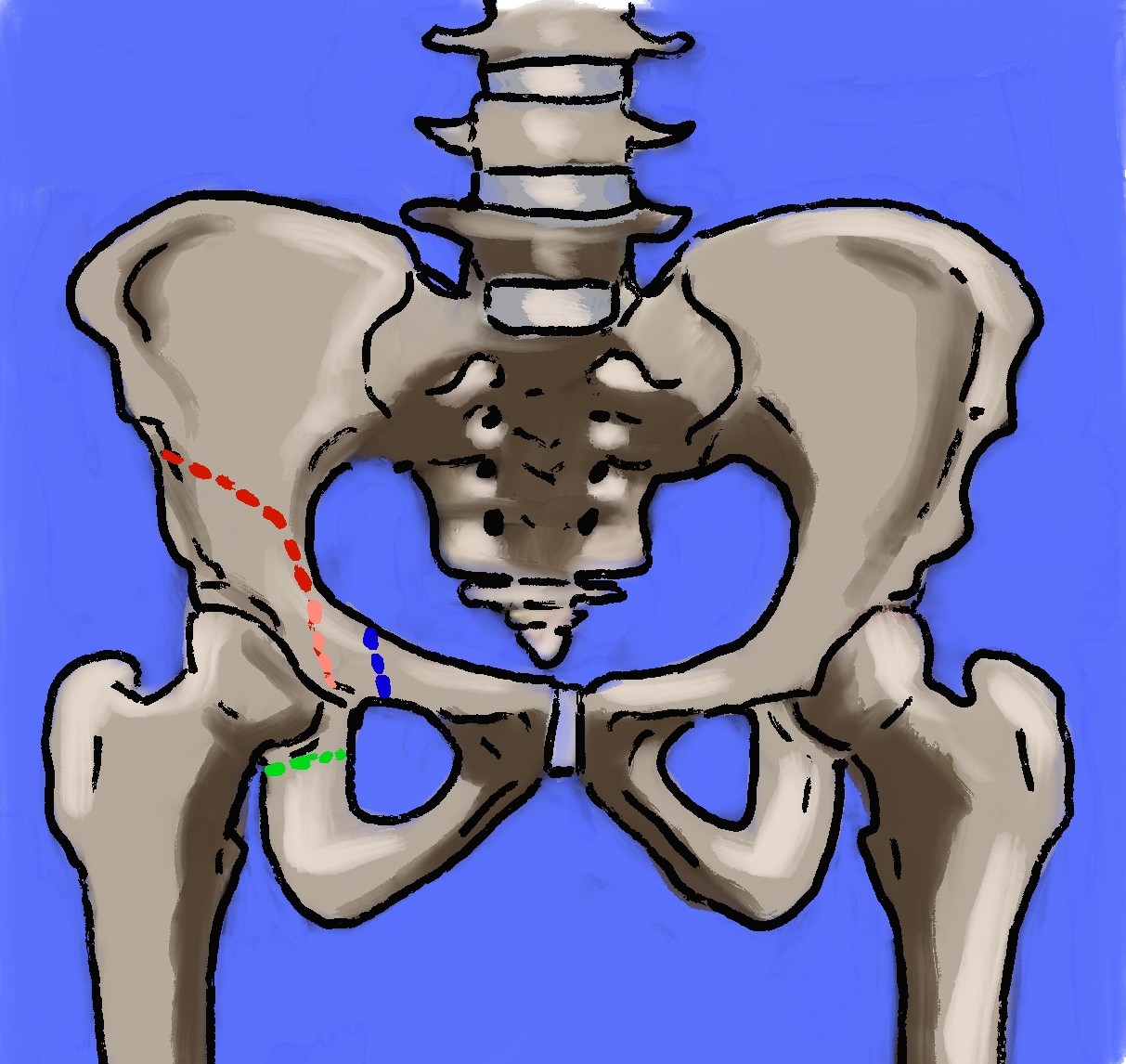
Schematic overview of periacetabular osteotomy; an individual operation may differ.
Image and video credits
Periacetabular osteotomy — schematic illustration (opens in a new tab) — Beckenrandgeschichten. CC BY-SA 4.0 (opens in a new tab).
Why It May Be Recommended
PAO may be recommended when:
- You have hip pain linked to hip dysplasia
- Imaging shows the socket does not cover the ball of the hip well
- Symptoms have not improved enough with activity changes, physical therapy, or medication
- The hip joint still has little to no advanced arthritis
- The goal is to protect the natural hip and delay or avoid hip replacement
PAO is not the right surgery for every patient. It is usually most helpful when the hip cartilage is still in reasonably good shape.
What Happens During Surgery
PAO is done in the operating room under anesthesia. At a high level, the surgery involves these steps:
- The surgeon makes an incision near the front of the hip and pelvis.
- Controlled cuts are made in the bone around the hip socket so the socket can be moved.
- The socket is rotated into a better position to cover the ball of the hip more normally.
- X-ray imaging is used during surgery to check the position.
- The socket is held in place with screws while the bone heals.
In some cases, the surgeon may also treat other hip problems at the same time, such as a labral tear or abnormal bone shape, if needed.
Common Questions Before Surgery
- How long will I be in the hospital? Many patients stay about 2 to 4 days, depending on pain control, walking safety, and overall recovery.
- Will I need crutches? Yes. Most patients use crutches or a walker for about 6 to 8 weeks, sometimes longer, while the bone heals.
- Will I need help at home? Usually yes, especially during the first 1 to 2 weeks. Help with meals, stairs, bathing, rides, and errands is often useful.
- When can I drive? Usually not until you are off opioid pain medicine and can safely control the car. This may take several weeks and can be longer if the right hip was operated on.
- Will I need physical therapy? Yes. Physical therapy is an important part of recovery and usually starts early, with activity increasing step by step.
- Do the screws stay in? Often they do. If screws later become bothersome, they can sometimes be removed after the bone has healed.
- Will PAO prevent arthritis forever? No. PAO can improve hip mechanics and may slow further damage, but it does not reverse existing arthritis and does not guarantee that future surgery will never be needed.
- How much time should I plan away from work or school? This depends on your pain, energy level, and activity demands. Desk work or school may be possible in a few weeks with accommodations, while jobs with lifting, climbing, or long periods of standing often require a much longer recovery.
Recovery and Rehabilitation
Recovery takes time because the bone has to heal. Your surgeon will give you a plan that fits your case.
Right After Surgery
- Pain, swelling, bruising, and fatigue are common
- You may start standing or walking with help soon after surgery
- Blood clot prevention may include medication, compression devices, and early movement
- You will be taught how to move safely, use crutches, and protect the hip
First 6 to 8 Weeks
- Weight bearing is usually limited
- Crutches or a walker are commonly needed
- Physical therapy focuses on gentle motion and basic muscle control
- Sitting for long periods, stairs, and daily tasks may be tiring
Around 2 to 4 Months
- Many patients slowly return to more normal daily activities
- Walking improves as bone healing progresses
- Strengthening becomes a bigger part of therapy
- School or desk work is often easier by this stage, though some patients return earlier with adjustments
Around 6 to 12 Months
- Strength, endurance, and confidence often continue to improve
- Return to sports, running, or higher-impact activity may take many months
- Full recovery is gradual and depends on bone healing, muscle recovery, and any additional procedures done at the same time
Risks and Possible Complications
All surgery has risks. Commonly discussed risks of PAO include:
- Blood loss, and sometimes the need for transfusion
- Infection
- Blood clots in the leg or lungs
- Injury or irritation to nearby nerves or blood vessels
- Numbness over part of the outer thigh, which is fairly common and may improve over time
- Bone healing more slowly than expected, or not healing fully
- The socket being corrected too much or too little
- Ongoing pain, stiffness, limp, or weakness
- Arthritis that continues to progress over time
- Need for another surgery later
Following weight-bearing limits, taking medications as directed, attending follow-up visits, and doing prescribed therapy can help lower some of these risks.
When to Call the Office
Call your surgeon or care team if you have:
- Fever, chills, or feeling unwell
- Increasing redness, drainage, bleeding, or bad odor from the incision
- Pain that is getting worse instead of slowly improving
- Numbness or weakness that is new or getting worse
- Trouble taking medicines, eating, drinking, or managing pain at home
- Questions about how much weight to put on the leg or how to use your brace, walker, or crutches
When to Seek Urgent Care
Seek urgent medical care right away for:
- Chest pain
- Shortness of breath
- Coughing up blood
- Calf pain or swelling, especially if one leg is more swollen than the other
- A fall or sudden injury with severe pain or inability to move the leg
- The foot becoming cold, pale, or hard to move
- Heavy bleeding or drainage that will not stop
Rehabilitation instructions after referral care
Follow the instructions and rehabilitation protocol from the surgeon who performs your operation.
Sources
References for further reading about this condition or procedure.
- Treatment Overview (opens in a new tab)
International Hip Dysplasia Institute
- Adolescent Hip Dysplasia (opens in a new tab)
American Academy of Orthopaedic Surgeons (AAOS), OrthoInfo