Gluteus Medius Repair
Gluteus medius repair reattaches a torn tendon on the outside of the hip.
Educational content only • Not a substitute for medical advice • For emergencies call 911
What This Surgery Is
Gluteus medius tendon repair is surgery to fix a tear in one of the tendons on the outside of the hip. The gluteus medius muscle helps keep your pelvis level when you stand and walk. When this tendon is torn, it can cause:
- pain on the outside of the hip
- limping
- weakness
- trouble standing on one leg
- pain with walking, stairs, or lying on that side
Anatomy and imaging
These illustrations and imaging examples can help you understand the anatomy. They do not show your diagnosis.
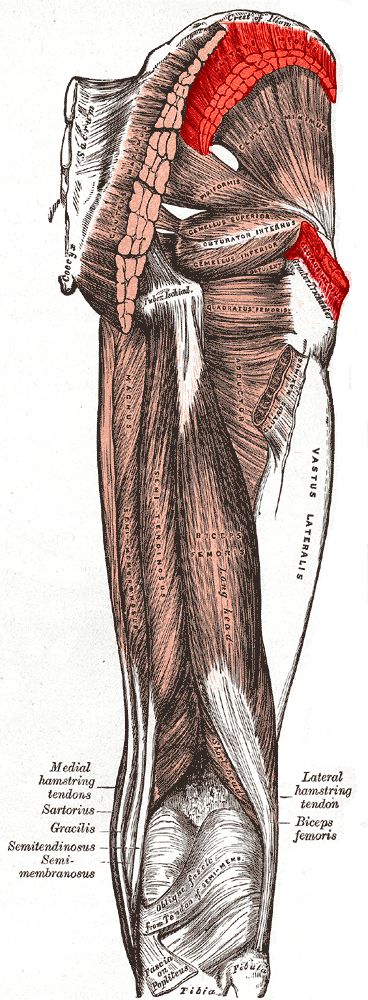
Location of the gluteus medius muscle and tendon region.
Image and video credits
Gluteus medius muscle (opens in a new tab) — Mikael Häggström. Public domain (opens in a new tab).
Why It May Be Recommended
Surgery may be recommended if you have a tendon tear and:
- pain has not improved with rest, activity changes, medicines, injections, or physical therapy
- you have ongoing weakness or a limp
- the tear is large or full-thickness
- symptoms are limiting daily activities or sleep
Your surgeon uses your symptoms, exam, and imaging to decide whether repair is likely to help.
How the Procedure Is Done
This surgery can be done through small incisions with a camera and instruments, or through a larger open incision. The exact approach depends on the tear and your surgeon's plan.
At a high level, the procedure usually includes:
- You receive anesthesia so you are comfortable during surgery.
- The surgeon makes small incisions or one larger incision over the outside of the hip.
- Inflamed tissue around the tendon may be cleaned out.
- The torn tendon and the bone where it normally attaches are prepared.
- Small anchors are placed in the bone.
- Strong stitches are used to bring the tendon back to the bone.
- The incision is closed and covered with a dressing.
Before Surgery: Common Questions
Patients often want to ask about:
- whether the surgery will be outpatient or require an overnight stay
- how long they will need crutches or a brace
- when physical therapy will start
- how much help they will need at home for bathing, dressing, meals, and stairs
- when they should stop medicines such as blood thinners, anti-inflammatory medicines, or supplements
- when to stop eating and drinking before surgery
- when they may drive again
- how much time to plan away from work
- when they may return to exercise, sports, or heavy lifting
It is also important to tell your care team if you smoke, have diabetes, have a history of blood clots, or have had problems with anesthesia in the past.
Right After Surgery
After surgery, you will go to a recovery area while the anesthesia wears off. Many patients go home the same day, while some stay overnight. This depends on the surgical approach, pain control, and other health needs.
You may have:
- hip pain and soreness for several days to weeks
- swelling and bruising around the hip
- a bandage over the incision
- crutches or a walker
- a brace in some cases
- instructions to limit how much weight you put on the leg
Your care team will give you instructions about:
- pain control
- wound care and showering
- sleeping positions
- safe walking and transfers
- blood clot prevention
- when to start exercises or physical therapy
Recovery and Return to Activity
Recovery is gradual because the tendon needs time to heal back to bone.
Many patients can expect:
- crutches or limited weight bearing for about 4 to 6 weeks, sometimes longer
- physical therapy over several months
- improvement in basic daily activities over 6 to 12 weeks
- return to desk-type work in a few weeks for some patients, depending on pain and mobility
- return to more demanding work, sports, or higher-impact activity in about 4 to 6 months, sometimes longer
Recovery plans vary. Your surgeon may limit active hip movement or certain positions early on to protect the repair.
Risks and Possible Complications
All surgery has risks. Possible risks of gluteus medius tendon repair include:
- infection
- bleeding
- blood clots
- problems related to anesthesia
- injury to nearby nerves or blood vessels
- stiffness
- continued pain or weakness
- the tendon not healing fully
- a repeat tear
- need for more treatment or another surgery
Following weight-bearing limits and therapy instructions helps protect the repair while it heals.
When to Call the Office
Call your surgeon's office if you have:
- fever
- increasing redness, warmth, swelling, or drainage at the incision
- pain that is getting worse instead of better
- trouble taking medicines because of nausea or side effects
- new numbness or tingling that does not improve
- questions about the bandage, brace, or activity limits
When to Seek Urgent Care
Seek urgent medical care right away if you have:
- chest pain
- shortness of breath
- severe calf pain or major leg swelling
- sudden severe pain in the hip or leg
- heavy bleeding
- signs of an allergic reaction, such as swelling of the face or trouble breathing
Dr. Rizzo’s physical therapy protocols
These are my own rehabilitation protocols. Your operation, graft, and any additional repairs determine which one applies.
Hip Gluteus Tendon Repair Protocol
Use when your discharge instructions name gluteus medius or hip gluteus tendon repair.
Open protocol PDF (opens in a new tab)Sources
References for further reading about this condition or procedure.
- Hip Arthroscopy (opens in a new tab)
American Academy of Orthopaedic Surgeons (AAOS), OrthoInfo
- Hip Bursitis (opens in a new tab)
American Academy of Orthopaedic Surgeons (AAOS), OrthoInfo