Trochanteric Bursectomy
Trochanteric bursectomy removes irritated bursa tissue on the outside of the hip.
Educational content only • Not a substitute for medical advice • For emergencies call 911
What This Procedure Is
A trochanteric bursectomy is surgery to remove an irritated bursa on the outside of the hip. A bursa is a small fluid-filled sac that helps soft tissues glide over bone. The bursa involved sits over a bony point on the upper thigh bone called the greater trochanter.
When this area stays inflamed, it can cause pain with walking, climbing stairs, getting up from a chair, exercise, or lying on that side at night.
Most people improve without surgery. This operation is usually considered only after treatments such as activity changes, anti-inflammatory medicine, injections, and physical therapy have not provided enough relief.
Anatomy and imaging
These illustrations and imaging examples can help you understand the anatomy. They do not show your diagnosis.
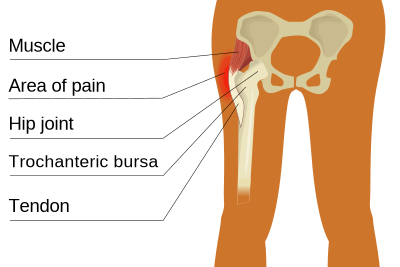
The usual pain region in greater trochanteric pain syndrome.
Image and video credits
Greater trochanteric pain syndrome (opens in a new tab) — Hariadhi. CC BY-SA 4.0 (opens in a new tab).
Why It May Be Recommended
Your surgeon may discuss this procedure if:
- Outer hip pain has lasted for months or keeps coming back
- Pain limits sleep, walking, exercise, work, or daily activities
- Nonsurgical treatment has not helped enough
- Your exam, and sometimes imaging, suggest the bursa or nearby rubbing tissue is the main source of pain
Sometimes pain on the outside of the hip also comes from nearby tendons, arthritis, or the lower back. A careful exam before surgery is important because bursectomy does not treat every cause of hip pain.
Common Questions Before Surgery
Will I be asleep?
Many patients have anesthesia so they are asleep or very relaxed and comfortable. The exact plan depends on the surgical team and your health history.
Is this usually an outpatient surgery?
Yes. Most patients go home the same day.
What should I ask before surgery?
- Why do you think surgery is the right next step for my pain?
- Will you use an open incision or a camera-assisted technique?
- Will you also treat any tight tissue rubbing over the bone, such as the iliotibial band?
- Will I need crutches, a cane, or physical therapy afterward?
- When can I return to work, driving, exercise, and sleeping on that side?
- Which medicines should I stop or continue before surgery?
Follow your surgical team's instructions about eating, drinking, bathing, and medicines before the procedure.
What Happens During the Procedure
At a high level, the surgery usually involves these steps:
- You receive anesthesia.
- The surgeon makes a small incision, or a few small openings, over the outside of the hip.
- The inflamed bursa is removed.
- If needed, the surgeon may also treat tissue that is rubbing over the bone, such as a tight iliotibial band, or smooth a prominent area of bone.
- The area is closed with stitches, staples, or skin adhesive and covered with a dressing.
In some cases, a small drain is used for a short time to help prevent fluid build-up.
Recovery After Surgery
Most people go home the same day. It is normal to have soreness, swelling, and bruising around the outer hip for the first several days.
Right after surgery
- Walking is often allowed right away or within a day, usually as tolerated
- A cane or crutches may be used for comfort for a short time
- Ice, rest, and pain medicine can help during the early recovery period
- Keep the incision clean and dry, and follow instructions for showering and bandage changes
Physical Therapy and Activity
Physical therapy is often recommended. Early therapy focuses on gentle motion and walking. Later therapy works on hip and core strength, balance, and movement patterns that reduce rubbing over the outside of the hip.
When Can I Get Back to Normal Activities?
Recovery varies based on your overall health, the exact procedure, and whether other problems were treated at the same time. Many patients can expect:
- Light daily activities within days to 2 weeks
- Desk work in about 1 to 2 weeks if pain is controlled and no sedating pain medicine is needed
- Driving once you can safely control the leg and are no longer taking opioid pain medicine, if your surgeon agrees
- More physical jobs after several weeks or longer
- Gradual return to exercise over about 6 to 12 weeks
Some patients feel meaningful pain relief within a few weeks, but full improvement can take a few months.
Risks and Possible Complications
All surgery has risks. With trochanteric bursectomy, possible problems include:
- Infection
- Bleeding, bruising, or a fluid pocket under the skin
- Blood clots in the leg or lung
- Irritation of nearby nerves, which can cause numbness, tingling, or burning pain
- Scar tenderness
- Stiffness or weakness
- Ongoing pain, incomplete pain relief, or return of symptoms
- Risks related to anesthesia
Your surgeon can explain which risks are more or less likely in your situation.
When to Call the Office
Call your surgeon's office if you have:
- Fever over 101°F (38.3°C)
- Increasing redness, warmth, swelling, or drainage at the incision
- Pain that is getting worse instead of better
- New numbness or weakness in the leg
- Calf pain or swelling
- Trouble keeping food, fluids, or medicine down
- Questions about your dressing, drainage, or activity limits
When to Seek Urgent Care
Seek urgent medical care right away, or call 911, for:
- Chest pain
- Shortness of breath
- Coughing up blood
- Severe bleeding
- A severe allergic reaction
- Sudden severe symptoms that feel like an emergency
Dr. Rizzo’s physical therapy protocols
These are my own rehabilitation protocols. Your operation, graft, and any additional repairs determine which one applies.
A public trochanteric bursectomy rehabilitation protocol is not currently available on this site.
Sources
References for further reading about this condition or procedure.
- Hip Bursitis (opens in a new tab)
American Academy of Orthopaedic Surgeons (AAOS), OrthoInfo
- Hip Arthroscopy (opens in a new tab)
American Academy of Orthopaedic Surgeons (AAOS), OrthoInfo