High Tibial Osteotomy
A high tibial osteotomy changes the alignment of the shinbone near the knee.
Educational content only • Not a substitute for medical advice • For emergencies call 911
Why It May Be Recommended
Your surgeon may recommend HTO if you have:
- Pain on one side of the knee that has not improved enough with non-surgical treatment
- Bow-legged alignment that puts extra pressure on the worn part of the knee
- A goal of staying active while trying to delay a partial or total knee replacement
- A need for a knee-preserving procedure, sometimes along with other cartilage or meniscus treatment
HTO is not the right choice for every person with knee arthritis. It usually works best when the damage is mainly on one side of the knee and the other side is in better shape.
Anatomy and imaging
These illustrations and imaging examples can help you understand the anatomy. They do not show your diagnosis.
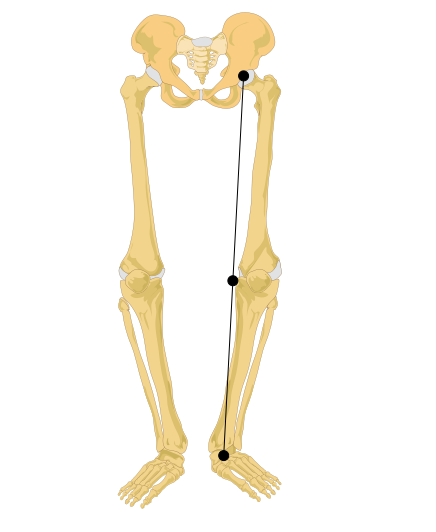
Simplified example of varus alignment.
Image and video credits
Genu varum (opens in a new tab) — LadyofHats, Jecowa, and Stündle. CC0 1.0 (opens in a new tab).
What Happens During the Procedure
At a high level, the surgery usually involves:
- Anesthesia so you do not feel pain during the procedure
- X-rays and measurements to plan how much correction is needed
- A cut in the upper tibia, just below the knee
- Opening the bone slightly like a wedge, or removing a small wedge of bone, to change the leg’s alignment
- Placing a metal plate and screws to hold the bone while it heals
- Using a bone graft or spacer in some cases
- Closing the incision and covering it with a dressing
Before Surgery: Practical Questions and Preparation
Questions many patients ask before surgery include:
- Why is HTO being recommended instead of a partial or total knee replacement?
- Will I likely have an opening-wedge or closing-wedge osteotomy?
- How long will I need crutches, a walker, or a brace?
- When can I return to work, school, driving, exercise, and sports?
- What help will I need at home during the first 1 to 2 weeks?
- Do I need to stop any medicines, supplements, or nicotine products before surgery?
Before surgery, tell your team about all medicines, vitamins, supplements, allergies, smoking or vaping, and any illness such as a cold, flu, COVID-19, or fever. Smoking and nicotine can slow bone healing. It also helps to arrange a ride home and set up your home so it is easier to move around safely after surgery.
Recovery and Rehabilitation
After surgery, you will spend time in a recovery area while the anesthesia wears off. The first few days often include pain, swelling, bruising, and stiffness. Ice, elevation, pain medicine, and gentle movement are commonly used early on.
Many patients use crutches or a walker for about 6 weeks or longer. Weight bearing is often limited at first and then increased slowly as the bone heals. Some people also use a brace.
Physical therapy is an important part of recovery. It usually starts with motion and swelling control, then builds toward strength, balance, walking, and stairs.
Common recovery ranges are:
- Desk work or school: often about 2 to 6 weeks, depending on pain, mobility, and commuting
- Heavier physical work: often about 3 to 4 months or longer
- Driving: usually not right away; you need to be off opioid pain medicine and able to control the leg safely
- Major improvement in daily activity: often about 3 to 6 months
- Full recovery: often continues for 6 to 12 months
Recovery plans vary. Your surgeon’s instructions matter most because activity limits depend on your X-rays, bone healing, and overall progress.
Risks and Possible Complications
Possible risks include:
- Infection
- Bleeding
- Blood clots in the leg or lungs
- Slow bone healing or the bone not healing fully
- Ongoing pain, stiffness, or swelling
- The leg being corrected too little or too much
- Irritation from the plate or screws, sometimes leading to later hardware removal
- Injury to nearby nerves or blood vessels
- Needing more surgery later, including possible knee replacement in the future
When to Call the Office or Seek Urgent Care
Call your surgical team promptly if you have:
- Fever of 101°F (38.3°C) or higher, or a fever your team told you to report
- Increasing redness, warmth, drainage, bad smell, or opening at the incision
- Pain or swelling that is clearly getting worse instead of better
- New numbness, weakness, or trouble moving the foot or toes
- Calf pain, tenderness, redness, or swelling
Seek urgent care right away if you have:
- Sudden shortness of breath
- Chest pain, especially with breathing
- Coughing up blood
- A foot that becomes cold, blue, or suddenly very hard to move
Common Questions
Does HTO cure arthritis?
No. It changes how weight passes through the knee so the damaged side carries less pressure. This can reduce pain and improve function, but arthritis can still progress over time.
Will the plate and screws stay in?
Often yes. They may be left in place unless they cause irritation or your surgeon recommends removal later.
Will I still need a knee replacement someday?
Possibly. HTO may delay knee replacement, but it does not guarantee you will never need one.
Will I need physical therapy?
Usually yes. Therapy helps you regain motion, strength, balance, and a steadier walking pattern.
How long will I need crutches?
Many people need them for about 6 weeks or longer, but the exact timeline depends on bone healing and your surgeon’s plan.
Dr. Rizzo’s physical therapy protocols
These are my own rehabilitation protocols. Your operation, graft, and any additional repairs determine which one applies.
High Tibial Osteotomy Protocol
Use when your discharge instructions name high tibial osteotomy (HTO).
Open protocol PDF (opens in a new tab)Sources
References for further reading about this condition or procedure.
- Osteotomy of the Knee (opens in a new tab)
American Academy of Orthopaedic Surgeons (AAOS), OrthoInfo