Iliopsoas Release
Iliopsoas release lengthens or partly releases a tendon at the front of the hip.
Educational content only • Not a substitute for medical advice • For emergencies call 911
What This Procedure Is
The iliopsoas is the main hip-flexor. It helps lift the knee and bend the hip. In some people, the iliopsoas tendon becomes tight, irritated, or thickened and snaps across the front of the hip. This can cause painful clicking, catching, or groin pain.
An iliopsoas tendon release, also called a tenotomy, is surgery to partially cut or lengthen the tendon so it no longer pulls as tightly. The goal is to reduce painful snapping and improve smoother movement.
Anatomy and imaging
These illustrations and imaging examples can help you understand the anatomy. They do not show your diagnosis.
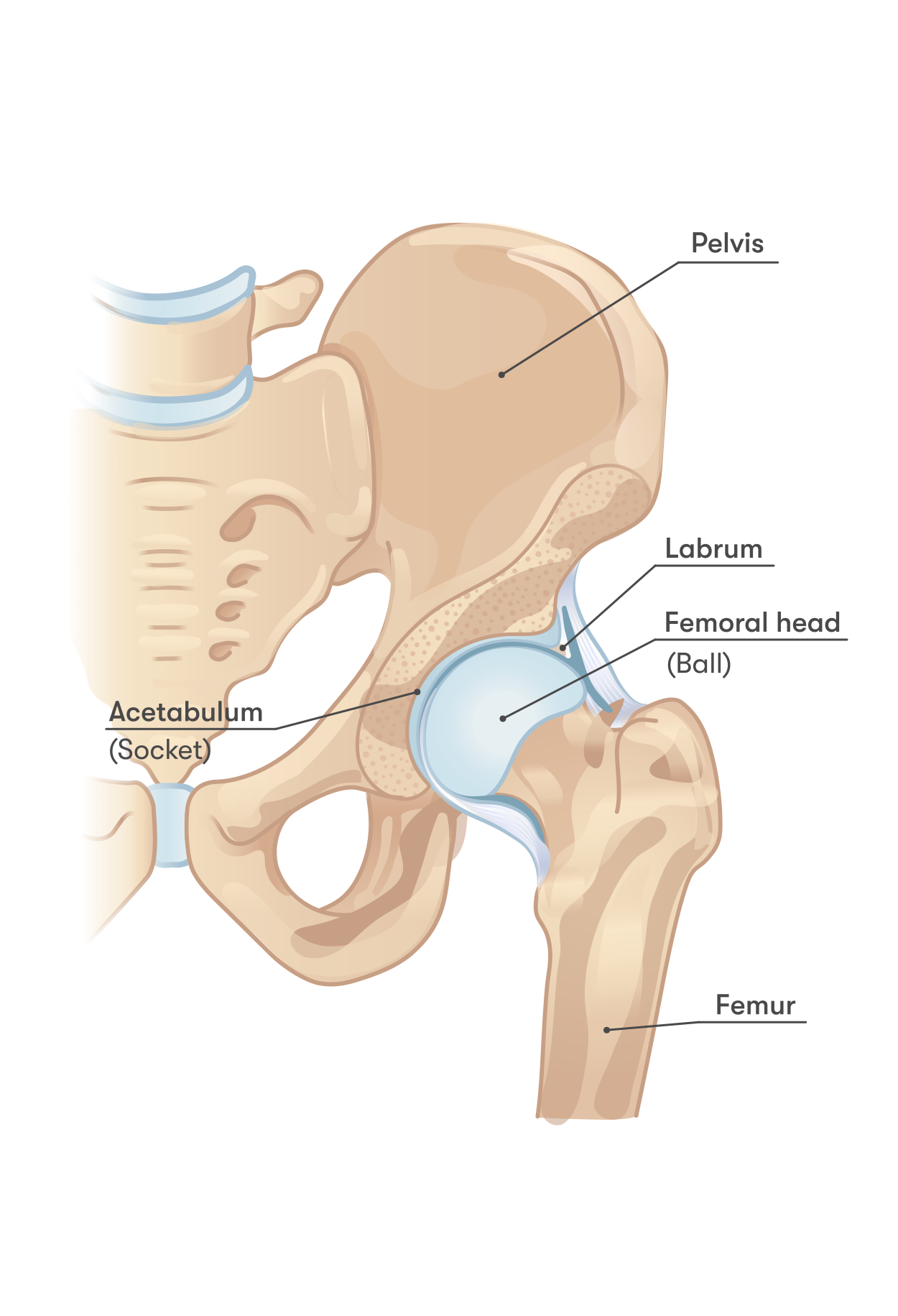
Hip anatomy for orientation.
Image and video credits
Hip anatomy (opens in a new tab) — InjuryMap. CC BY-SA 4.0 (opens in a new tab).
Why It May Be Recommended
This surgery is usually considered only after a careful trial of nonsurgical treatment, such as:
- activity changes
- stretching and physical therapy
- anti-inflammatory medicine, if appropriate
- an injection to calm the tendon area
It may be recommended when the iliopsoas tendon appears to be the main source of symptoms, including:
- painful internal snapping hip syndrome
- ongoing groin pain from iliopsoas irritation
- continued symptoms that limit daily activity, exercise, or sports despite nonsurgical care
Painless snapping by itself usually does not need surgery.
What Happens During Surgery
This procedure is usually done with anesthesia so you do not feel pain during the operation.
At a high level, the surgery involves:
- Finding the tendon: The surgeon reaches the iliopsoas tendon either through a few small incisions with a camera and small instruments, or through a small open incision if better access is needed.
- Releasing the tendon: The tendon is partially released or lengthened to decrease tension.
- Checking for other hip problems: In some patients, the surgeon also treats problems inside the hip, such as a labral tear or femoroacetabular impingement (FAI, extra bone that pinches the hip).
- Closing the incisions: The skin is closed with stitches, tape, or skin glue and covered with a dressing.
Most isolated iliopsoas releases are outpatient procedures, so many patients go home the same day.
Recovery and Return to Activity
Recovery depends on whether the release was done by itself or together with another hip procedure. If other hip surgery is done at the same time, follow the more protective plan from your surgical team.
General expectations:
- go home the same day or after one night
- soreness, swelling, bruising, and groin tightness for the first days to weeks
- crutches or a cane for a few days to 2-3 weeks, depending on comfort and the rest of the procedure
- limits on straight-leg raises, high knee lifts, or resisted hip-flexor exercises for several weeks
- physical therapy starting with walking and gentle motion, then adding core, glute, and hip strengthening
Return-to-activity ranges often look like this:
- Light daily activity: within days to a few weeks
- Desk work or school: often about 1-2 weeks, if pain is controlled
- Driving: often about 1-3 weeks, once you are off opioid pain medicine and can safely control the leg
- Running, jumping, or sports: often around 3-4 months or longer, especially if another hip procedure was done
Temporary hip-flexor weakness is common early on. Many patients notice less snapping as healing progresses, but symptom relief is not always immediate and some weakness can last longer.
Risks and Possible Complications
Every surgery has risks. Possible problems include:
- infection
- bleeding or a collection of blood under the skin
- blood clots in the leg or lungs
- numbness, tingling, or nerve irritation near the groin or front or outer thigh
- ongoing hip-flexor weakness
- stiffness or scar tissue
- incomplete pain relief, continued snapping, or return of symptoms
- need for more treatment if symptoms do not improve enough
Your surgeon balances these risks against the goal of improving pain and function.
When to Call the Office or Seek Urgent Care
Call the Office
Call your care team promptly if you notice:
- fever over 101 F (38.3 C)
- increasing redness, warmth, drainage, bad smell, or opening of the incision
- pain or swelling that is getting worse instead of slowly improving
- new numbness or weakness in the leg
- nausea, vomiting, constipation, or medication side effects that you cannot manage
- questions about crutches, wound care, or activity restrictions
Seek Urgent Care Right Away
Get urgent medical help or call emergency services for:
- chest pain
- trouble breathing
- new calf pain or swelling
- heavy bleeding or rapidly increasing groin or thigh swelling
- the foot becoming very cold, pale, blue, or hard to move
- a fall, sudden pop, or sudden loss of ability to bear weight as instructed
Questions Patients Often Ask Before Surgery
- Will I be asleep? Many of these procedures are done with general anesthesia. Some patients also receive numbing medicine to help with pain after surgery.
- Will I go home the same day? Many patients do, unless another procedure or a medical issue makes an overnight stay safer.
- Will the snapping stop right away? It often improves, but swelling and soreness can cause temporary catching or discomfort early in recovery.
- Will I need physical therapy? Usually yes. Therapy helps restore walking, motion, strength, and control of the hip.
- Will I need help at home? It is wise to arrange a ride home and some help for the first few days, especially with stairs, shoes, dressing, and getting in and out of a car.
- What should I ask before surgery? Ask when to stop eating and drinking, which medicines to stop or continue, whether you will use crutches or a brace, when therapy starts, and how recovery changes if another hip procedure is planned.
- When can I get back to work or sports? Light work often returns sooner than jobs with lifting, climbing, or long hours on your feet. Sports should wait until pain, strength, balance, and surgeon clearance all line up.
Dr. Rizzo’s physical therapy protocols
These are my own rehabilitation protocols. Your operation, graft, and any additional repairs determine which one applies.
A public iliopsoas release rehabilitation protocol is not currently available on this site.
Sources
References for further reading about this condition or procedure.
- Snapping Hip (opens in a new tab)
American Academy of Orthopaedic Surgeons (AAOS), OrthoInfo
- Hip Arthroscopy (opens in a new tab)
American Academy of Orthopaedic Surgeons (AAOS), OrthoInfo