Proximal Hamstring Repair
Proximal hamstring repair reattaches torn tendons to the sit bone at the back of the pelvis.
Educational content only • Not a substitute for medical advice • For emergencies call 911
What this surgery is
The hamstrings are the muscles along the back of the thigh. Their tendons attach near the buttock to the pelvis. When these tendons tear off the bone, it can cause:
- sudden pain in the buttock or back of the thigh
- bruising and swelling
- weakness with walking, climbing stairs, or pushing off
- pain when sitting
- trouble returning to sports or heavy activity
If the tendon pulls completely off the bone, this is often called an avulsion.
Anatomy and imaging
These illustrations and imaging examples can help you understand the anatomy. They do not show your diagnosis.
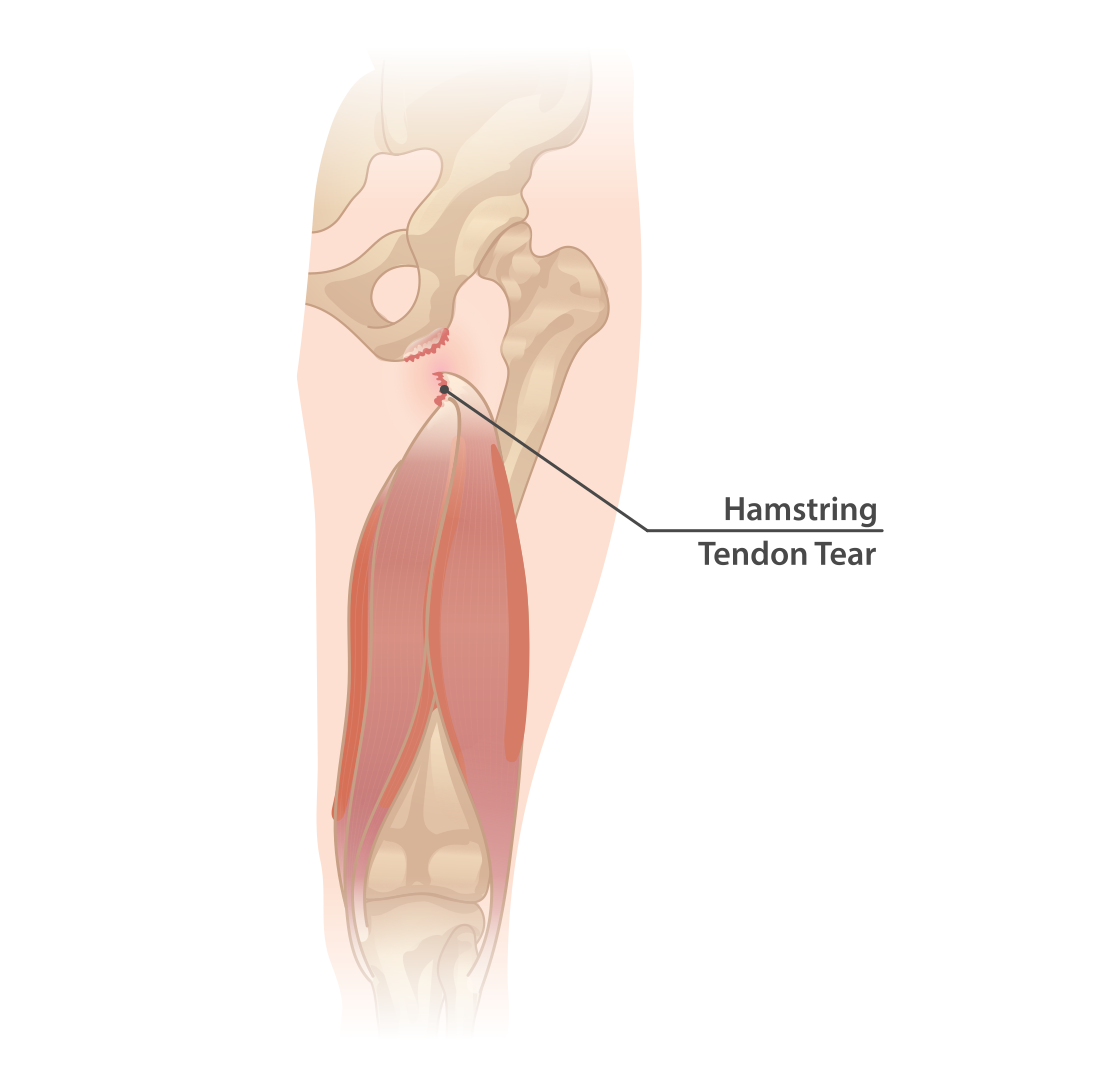
This illustration shows the hamstring region; proximal repair concerns tears near the sitting bone.
Image and video credits
Hamstring tear (opens in a new tab) — InjuryMap. CC BY-SA 4.0 (opens in a new tab).
Why surgery may be recommended
Surgery may be recommended when:
- the tendon is completely torn off the bone
- more than one tendon is torn
- the tendon has pulled back from the bone
- pain, weakness, or trouble with activity continue after rest, physical therapy, and other non-surgical treatment
- you want to return to higher-demand work or sports and the tear is unlikely to heal well without repair
Not every hamstring tear needs surgery. Many partial tears improve without an operation.
What happens during surgery
At a high level, the procedure usually includes these steps:
- You are given anesthesia so you are asleep and do not feel pain during surgery.
- The surgeon makes an incision near the lower buttock.
- The torn tendon is found and gently freed from scar tissue if needed.
- The nearby sciatic nerve, the main nerve that runs down the back of the leg, is identified and protected.
- The tendon is reattached to the sitting bone using strong stitches attached to small anchors placed in the bone.
- The incision is closed and covered with a dressing.
Many people go home the same day. Some stay one night.
Right after surgery
Right after surgery, it is common to have:
- pain, swelling, and bruising
- soreness when sitting
- a brace to limit motion
- crutches with limited weight bearing for several weeks
- a follow-up visit within about 1 to 2 weeks
Your team may also give you instructions about icing, wound care, showering, medicines, and blood clot prevention.
Recovery and return to activity
Recovery takes time because the tendon must heal back to bone.
A common general pattern is:
- First 4 to 6 weeks: Protect the repair. Many patients use crutches and a brace. Weight bearing is limited. Stretching the hamstring is usually avoided.
- Weeks 6 to 12: Walking and motion gradually increase. Physical therapy usually becomes more active.
- Months 3 to 4: Strength and balance work continue. Many daily activities feel easier.
- Around 5 to 6 months: Many people can return to running, sports, or heavier activity if healing is on track.
- 6 months or longer: Full recovery and confidence can continue to improve over time.
Recovery is not the same for everyone. Some people recover faster, while others need longer, especially after large tears or delayed surgery.
Questions patients often ask before surgery
Will I need help at home?
Usually, yes. It helps to have someone with you for at least the first few days because moving around, bathing, dressing, and getting in and out of bed can be harder with crutches and a brace.
How long will I use crutches?
Many patients use crutches for about 4 to 6 weeks, but the exact time varies.
When can I drive?
This depends on which leg had surgery, whether you are still taking opioid pain medicine, and whether you can safely control the leg. Ask your surgeon before driving.
When can I go back to work?
Desk work may be possible sooner if pain is controlled and travel is manageable. Jobs that involve lifting, climbing, squatting, or fast movement usually take much longer.
Will I need physical therapy?
Usually, yes. Therapy is an important part of recovery and helps restore motion, strength, and safe return to activity.
What should I ask about before surgery?
Ask your care team about:
- which medicines to stop or continue before surgery
- when to stop eating and drinking before surgery
- how long you may need crutches or a brace
- how to sleep, sit, bathe, and use the bathroom safely after surgery
- when physical therapy will begin
- when you may return to work, driving, sports, and travel
Risks and possible complications
Most patients do well, but all surgery has risks. Possible problems include:
- infection
- bleeding or wound healing problems
- blood clots in the leg or lungs
- numbness around the incision
- irritation or injury to nearby nerves, including the sciatic nerve
- ongoing pain with sitting
- stiffness or scar tissue
- persistent weakness
- the tendon not fully healing or tearing again
Following the activity restrictions and therapy plan lowers the chance of problems, but it does not remove the risk completely.
When to call the office
Call your surgical team if you have:
- fever of 101°F (38.3°C) or higher
- redness, warmth, bad-smelling drainage, or increasing swelling at the incision
- pain that is getting worse instead of better
- calf pain or swelling
- worsening numbness, tingling, or weakness in the leg or foot
- a sudden pop, sharp pain, or new bruising in the back of the thigh
- trouble keeping food, fluids, or medicines down
When to seek urgent care
Seek urgent care right away or call emergency services if you have:
- sudden shortness of breath
- chest pain
- coughing up blood
- severe one-sided calf swelling with pain
- fainting
- heavy bleeding that will not stop
Dr. Rizzo’s physical therapy protocols
These are my own rehabilitation protocols. Your operation, graft, and any additional repairs determine which one applies.
Proximal Hamstring Repair Protocol
Use when your discharge instructions name proximal hamstring repair.
Open protocol PDF (opens in a new tab)Sources
References for further reading about this condition or procedure.
- Hamstring Muscle Injuries (opens in a new tab)
American Academy of Orthopaedic Surgeons (AAOS), OrthoInfo