Clavicle ORIF
Clavicle fracture surgery puts displaced pieces of the collarbone back into position and holds them with a plate and screws.
Educational content only • Not a substitute for medical advice • For emergencies call 911
What This Surgery Is
A clavicle fracture is a broken collarbone. ORIF stands for open reduction and internal fixation.
- Open reduction means the surgeon makes an incision and moves the broken bone pieces back into better alignment.
- Internal fixation means the bone is held in place with metal hardware, usually a plate and screws.
The goal is to help the clavicle heal in a better position and support return of shoulder function.
Anatomy and imaging
These illustrations and imaging examples can help you understand the anatomy. They do not show your diagnosis.
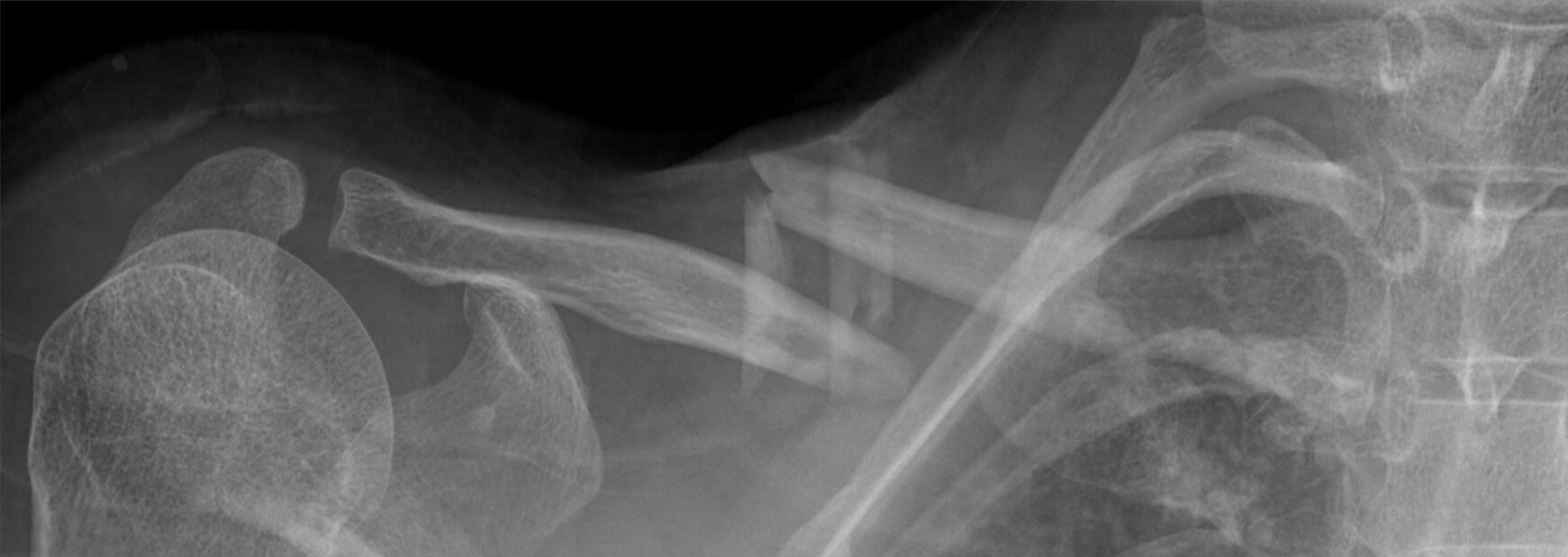
Example X-ray of a displaced fracture in the middle of the collarbone.
Image and video credits
Typische mittlere Klavikulafraktur mit verkippten Kleinfragmenten 39W - CR - 001 (opens in a new tab) — Hellerhoff. CC BY-SA 4.0 (opens in a new tab). Modification: Image metadata removed and recompressed as JPEG for web delivery.
Why Surgery May Be Recommended
Many collarbone fractures heal without surgery. ORIF may be recommended when:
- the broken ends are far apart, overlapped, or clearly out of position
- the bone is broken into several pieces
- the bone is pushing hard against the skin or has broken through the skin
- nearby nerves or blood vessels may be at risk
- the fracture pattern has a higher chance of healing poorly without surgery
Your surgeon weighs the possible benefits of surgery against the risks and the option of non-surgical care.
Common Questions Before Surgery
Patients and families often want to ask:
- Is surgery the best choice for this fracture, or is non-surgical treatment still reasonable?
- Will I go home the same day?
- How long will I need a sling?
- What medicines should I stop before surgery, if any?
- When can I shower, drive, work, or return to sports?
- Will I need physical therapy or a home exercise program?
- Will the plate and screws stay in permanently?
- How often will I need follow-up x-rays?
If you use nicotine in any form, tell your care team. Nicotine can slow bone healing.
What Happens During Surgery
ORIF is usually done under general anesthesia. Some patients also receive numbing medicine around the nerves to help with pain after surgery.
At a high level, the surgeon:
- makes an incision over the clavicle
- lines the broken bone pieces up
- holds the bone with a plate and screws; less often, a rod or pin is used
- checks the position, often with x-ray images in the operating room
- closes the incision, places a dressing, and puts the arm in a sling
Many patients go home the same day, but some need a longer stay depending on the injury and their overall health.
Right After Surgery
It is common to have:
- pain, swelling, and bruising around the shoulder or upper chest
- tiredness, nausea, or a sore throat for a short time after anesthesia
- a sling to protect the repair
- a follow-up visit with x-rays to check healing
Your care team will give instructions about pain control, wound care, bathing, sling use, and exercises. Hand, wrist, and elbow motion often starts early. Shoulder motion usually returns in stages.
Recovery and Return to Activity
Recovery takes time, and healing is different for each person. Follow the plan from your surgical team, since sling use and exercise timing can vary.
Common ranges are:
- first few days: pain control, rest, sling use, and protection of the repair
- about 2 to 6 weeks: sling use most or all of the time except for hygiene and approved exercises; no heavy lifting
- about 6 to 12 weeks: the bone is usually healing more solidly; shoulder motion often increases, and gentle strengthening may begin if your surgeon says it is safe
- several months: return to heavy lifting, overhead sports, contact sports, or hard physical work only after your surgeon clears you
Other points to know:
- Many people regain basic day-to-day function over a few months, but full strength and comfort can take longer.
- Driving is usually delayed until you are off prescription pain medicine, can safely control the vehicle, and your surgeon says it is okay.
- The plate and screws often stay in place. If the hardware becomes bothersome after the bone heals, some patients later choose to have it removed.
Risks and Possible Complications
Most people do well, but all surgery has risks. Possible problems include:
- infection
- bleeding or a collection of blood under the skin
- numbness around the incision
- irritation from the plate or screws
- shoulder stiffness
- slow healing, healing in poor alignment, or failure of the bone to heal
- loosening or breakage of the hardware
- injury to nearby nerves or blood vessels
- need for another surgery, including hardware removal
- anesthesia-related complications
When to Call the Office
Call your surgical team if you have:
- fever over 101°F (38.3°C)
- increasing redness, warmth, swelling, bad odor, or drainage from the incision
- pain that is getting worse instead of slowly improving
- new or increasing numbness, tingling, or weakness in the arm or hand
- trouble taking your medicines because of side effects
- a dressing problem, wound opening, or hardware that seems to poke through or threaten the skin
When to Seek Urgent Care
Seek urgent medical care right away for:
- trouble breathing
- chest pain
- severe bleeding
- the hand or fingers becoming cold, pale, blue, or very hard to move
- rapidly increasing swelling
- fainting, severe confusion, or another severe reaction after surgery
Dr. Rizzo’s physical therapy protocols
These are my own rehabilitation protocols. Your operation, graft, and any additional repairs determine which one applies.
Clavicle ORIF Protocol
Use when your discharge instructions name clavicle open reduction and internal fixation (ORIF).
Open protocol PDF (opens in a new tab)Sources
References for further reading about this condition or procedure.
- Clavicle Fracture (Broken Collarbone) (opens in a new tab)
American Academy of Orthopaedic Surgeons (AAOS), OrthoInfo